Six Million Strangers and a Perfect Schedule: What Yokohama's Train Stations Taught Me About Watching People
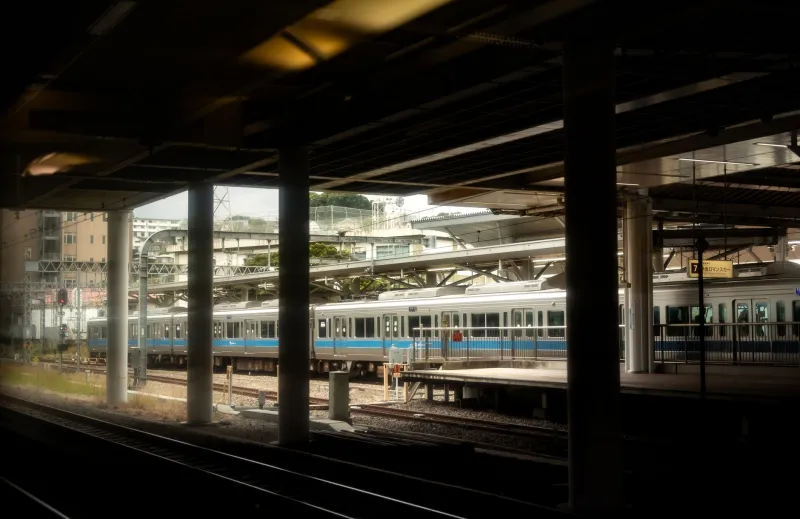
I didn't expect to fall in love with a train station. That wasn't part of the plan.
But somewhere between my third week in Yokohama and my hundredth time passing through Sakuragichō Station, something shifted. I stopped rushing. I started watching. And what I saw turned a mundane daily commute into something that felt genuinely cinematic — like stumbling into a documentary nobody had bothered to film yet.
Here's the thing about Japanese train stations that nobody really prepares you for: they are not just places you pass through. They are places where an entire culture quietly performs itself, every single hour of every single day.
The Choreography You Don't Notice Until You Do
The first thing that hits most Americans stepping onto a Yokohama platform for the first time is the quiet. Not silence — there's plenty of sound. Announcements, the soft chime of arriving trains, the shuffle of a thousand shoes on tile. But the chaos that you'd expect from a space moving this many people? It's just... absent.
Lines form at exact painted markers on the platform floor. People queue in two orderly columns, leaving a clear center lane for passengers getting off. Nobody pushes. Nobody cuts. A salaryman in a charcoal suit checks his phone without breaking stride, and somehow he and the school kid coming the other way avoid each other like they've been rehearsing since birth.
It took me an embarrassingly long time to realize I was watching something extraordinary. In New York or Chicago, that same volume of foot traffic would feel like controlled chaos at best, a mosh pit at worst. Here, it flows. And once you see the flow, you can't unsee it.
The Wardrobe Stories
Sakuragichō and Yokohama Station are both worth camping out in for an afternoon if you want a masterclass in Japanese fashion culture — and the fascinating contradictions within it.
You'll spot the classic salaryman uniform: dark suit, white shirt, a tie that suggests effort without personality. But stand there long enough and you'll notice the small rebellions. A pocket square in a bold burgundy. Sneakers that cost more than the suit. A briefcase that's been swapped for a tote bag from some gallery opening in Naka-ku.
Then there are the high school students in their uniforms, which somehow manage to look both rigidly standard and deeply individual depending on how they're worn. Socks scrunched or pulled up. Bags covered in pins and keychains. The uniform as canvas.
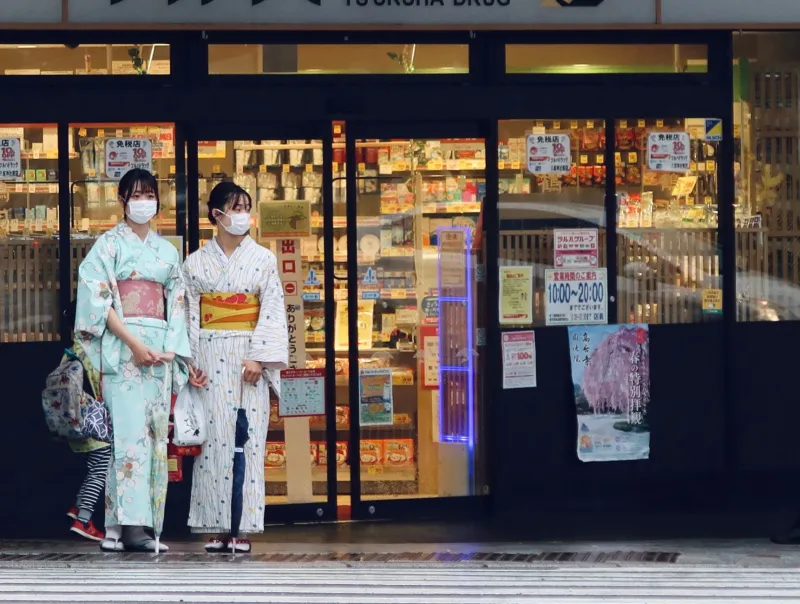
And then — my personal favorite category — the off-duty fashion people. Yokohama has a genuinely creative style scene, and you catch glimpses of it at the station in the most unexpected ways. Someone waiting for the Minato Mirai line in a vintage Comme des Garçons jacket. A woman in her sixties wearing color combinations that would get written up in a Brooklyn fashion blog without a second thought.
The station doesn't care about any of it. Everyone moves through the same turnstiles.
Time as a Social Contract
Here's something that will genuinely mess with your American brain: Japanese trains are almost never late. Not "pretty much on time." Actually, measurably, statistically on time. The Yokohama Municipal Subway once issued a formal public apology because a train departed 20 seconds early.
Twenty. Seconds.
What that level of punctuality does to a culture is fascinating to observe from a platform bench. People don't arrive early as a buffer — they arrive exactly when they need to, because the system has earned that trust completely. There's no anxious checking of arrival boards the way you'd obsessively watch the delayed F train status in Manhattan. People glance up, confirm what they already expected, and go back to whatever they were doing.
It sounds small. It is not small. That trust — between infrastructure and individual — shapes how people carry themselves in these spaces. Relaxed, but purposeful. Unhurried, but never late.
The Performers and the Performed-For
Not every station in Yokohama's network allows street performance, but where it's permitted, you get another layer entirely. A guitarist near the Motomachi-Chūkagai exit on a Saturday afternoon will draw a crowd that watches with a kind of focused, respectful attention that feels almost formal. People don't just half-listen while scrolling. They stop. They actually listen. And when the song ends, the applause is genuine and then immediately done, because the next train is coming and everyone already knew that.
There's an unspoken agreement happening in these moments that I find genuinely moving: I will give you my full attention for the duration of this song, and then we will both go on with our lives, and that was enough. It's a kind of presence that's hard to manufacture and easy to miss if you're not paying attention.
What You Actually Learn by Watching
I've been people-watching in airports, bus terminals, and subway cars across the US for most of my adult life. It's always interesting. But Yokohama's train stations taught me something different — that what makes people-watching genuinely revelatory is not the chaos, but the system that people exist within.
When everyone follows the same unspoken rules, the individual variations become louder. The woman who sits down and immediately pulls out a worn paperback. The elderly man who offers his seat before anyone even registers that a pregnant woman has boarded. The teenager who falls asleep standing up and somehow doesn't fall over.
These details only pop because the background noise of conflict and unpredictability has been turned way down. You see people more clearly when they're not fighting their environment.
I think about that a lot when I'm back home navigating a chaotic American transit experience. It's not that Japanese people are fundamentally different. It's that they've built systems that allow the quieter, more interesting parts of human behavior to come through.
And all it takes to see it is a platform bench and the willingness to miss one train on purpose.