What Nobody Tells You About Dressing in Yokohama (And Why I Finally Stopped Sticking Out)
The Moment I Realized I Was Doing It Wrong
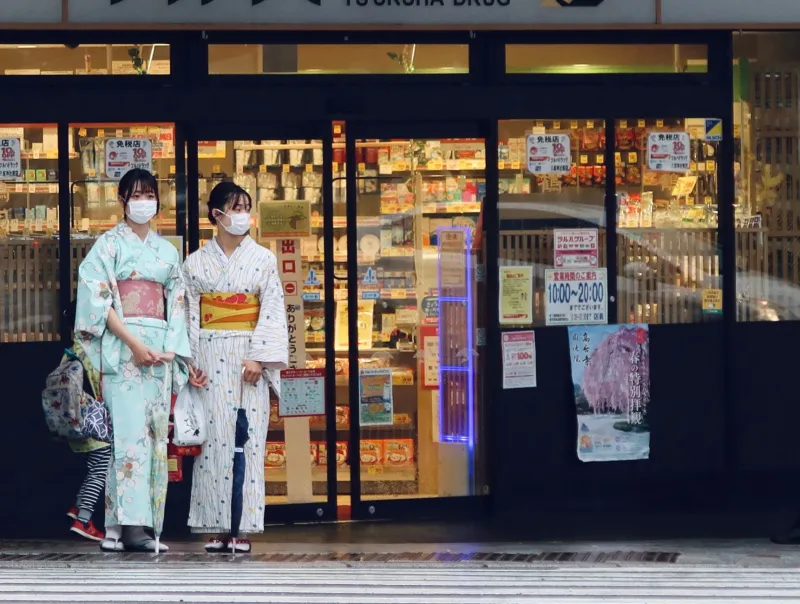
It happened on a Saturday afternoon in Motomachi, Yokohama's most fashion-forward shopping street. I was wearing my go-to New York outfit—high-waisted jeans, white sneakers, an oversized graphic tee—and feeling pretty good about myself. Then I caught my reflection in a boutique window next to a group of Japanese women in soft linen coordinates, structured bags, and delicate layered jewelry. I didn't look bad. I just looked... like I'd wandered off a different planet.
That moment kicked off months of quiet observation, a lot of shopping mistakes, and eventually something that felt like a breakthrough. Japanese fashion, especially in a city like Yokohama, isn't just about clothes. It's a whole visual language. And once you start learning even the basics, everything shifts.
It's Not About Being Flashy — It's About Being Considered
The first thing most Western women get wrong is assuming that standing out is the goal. Back home, bold prints, statement pieces, and mix-and-match maximalism are totally valid moves. In Yokohama's trendiest neighborhoods — Motomachi, Kannai, the boutique-lined streets near Yokohama Station — the aesthetic runs quieter.
Japanese street style is less about individual pieces screaming for attention and more about the overall composition of an outfit. Think of it like interior design: every element serves the whole. A loud bag might work, but only if everything else pulls back. A bold pattern is fine, but it's usually balanced by neutral, understated basics.
This doesn't mean boring. It means intentional. Once I stopped trying to make individual pieces "pop" and started thinking about how an outfit read as a single unit, I started getting it right.
The Seasonal Color Thing Is Real
In the US, we wear what we want, when we want. Burnt orange in July? Sure. Pastels in October? Go for it. In Japan, seasonal color palettes are taken seriously — not as a rigid rule, but as a deeply ingrained cultural instinct.
Spring calls for soft pinks, dusty lavenders, and warm whites. Summer shifts toward crisp linens, cool blues, and muted earth tones. Fall brings olive, rust, and deep burgundy. Winter layers in charcoal, navy, and camel. Wearing the "wrong" season's palette won't get you kicked out of anywhere, but locals will notice — and more importantly, you'll notice that you don't quite fit the visual landscape.
The easiest way to calibrate? Walk into any mid-range Japanese clothing store like Uniqlo, Beams, or Urban Research and look at what's on the floor right now. That's your seasonal palette cheat sheet.
Silhouette Logic: Why Proportions Matter More Than Size
American fashion tends to celebrate the body — form-fitting cuts, curves on display, everything tailored close. Japanese street style often does something different: it plays with proportion as an art form.
Oversized tops paired with slim-cut trousers. Wide-leg pants with a tucked-in fitted knit. A structured blazer worn over a floaty midi dress. The contrast between volumes is the point. It creates a kind of visual balance that feels polished without being uptight.
What trips up a lot of Western visitors is wearing oversized pieces head-to-toe. In Japan, that reads as sloppy rather than relaxed. The trick is always anchoring one part of the outfit — a fitted ankle, a tucked waist, a structured shoulder — to give the looser elements somewhere to land.
The Quiet Power of Accessories
If Japanese fashion has a secret weapon, it's accessories — and specifically, the restraint with which they're used.
You won't see a lot of statement earrings, stacked bangles, or chunky necklaces in Yokohama's everyday street style. What you will see is one very good bag, worn consistently. A single delicate ring. Small, elegant earrings. A scarf tied with precision. The accessories aren't absent — they're just doing quiet, confident work.
This was hard for me to adjust to. I'm a maximalist by nature. But I started experimenting with paring down to one "hero" accessory per outfit, and the difference was immediate. I felt more put-together, not less.
Also worth noting: shoes matter enormously. Japanese women invest in footwear the way Americans invest in handbags. A clean, well-maintained shoe — loafers, ballet flats, structured sneakers — elevates an otherwise simple outfit in a way that's hard to explain until you see it in action.
Shopping in Yokohama With New Eyes
Once I started understanding the logic behind the aesthetic, shopping in Yokohama became one of my favorite things to do here. Motomachi's independent boutiques are genuinely worth the browse — the curation is specific and considered in a way that big American retailers rarely match. Landmark Plaza and MARK IS near Minato Mirai carry a mix of Japanese and international brands with a local sensibility.
For vintage and more experimental pieces, the area around Kannai has a quieter, more underground energy — think carefully curated secondhand shops where the staff actually knows the provenance of what they're selling.
The shift in how I shop has been real. I buy fewer things, but I think harder about each one. Does it work with what I already have? Does it fit the season? Is the silhouette doing something interesting? It sounds like a lot of questions, but after a while it becomes instinct.
You Don't Have to Disappear — Just Pay Attention
None of this is about erasing yourself or performing a culture that isn't yours. It's about developing a kind of visual literacy that makes you a more thoughtful participant in the space you're moving through.
Yokohama has always had a more international, outward-facing energy than a lot of Japanese cities — it was one of the first ports opened to foreign trade, and that history shows up in the fashion, the food, the architecture. There's room here for Western sensibilities. The city is genuinely cosmopolitan.
But there's a difference between bringing your own style to a place and being oblivious to the visual culture around you. Learning the unspoken rules doesn't mean following them blindly. It means you get to decide, consciously, which ones to embrace and which ones to bend — and that's where the real fun starts.