Jet-Lagged and Starving at 6 AM? Japan's Underground Food Halls Are Your New Best Friend
Picture this: you've just dragged your suitcase off the Narita Express, you're somewhere between exhausted and delirious, and your stomach has absolutely no idea what meal it's supposed to be demanding. Every American traveler I know has lived this exact moment. And almost none of them knew that salvation was literally one escalator ride underground.
Welcome to the depachika — or depāto chika, if you want to get technical about it. Roughly translated, it means "department store basement," and that description does it about as much justice as calling the Grand Canyon "a ditch in Arizona."
What Even Is a Depachika?
Japan's major department stores — your Isetan, your Takashimaya, your Mitsukoshi — are impressive enough on their upper floors. But descend to the basement levels and you enter a completely different universe. We're talking sprawling, impeccably lit food halls that can stretch across thousands of square feet, packed wall to wall with vendors selling everything from hand-rolled sushi and artisan wagashi (traditional sweets) to French patisserie, Kyoto-style pickles, freshly grilled yakitori, and seasonal bentō boxes assembled with the kind of care most American restaurants reserve for their tasting menus.
Depachika as a concept really took hold in Japan during the postwar economic boom of the 1960s and 70s, when department stores were essentially the temples of aspiration for the growing middle class. The basement food halls became a way to democratize luxury — you might not be buying a designer handbag upstairs, but you could absolutely treat yourself to a perfect slice of matcha roll cake on your way out. That philosophy stuck. Today, depachika generate a staggering portion of overall department store revenue in Japan, and for good reason: they're genuinely extraordinary.
Why Jet Lag Actually Makes Them Better
Here's the counterintuitive truth about arriving in Japan sleep-deprived and temporally confused: the depachika is designed for exactly your mental state.
Everything is labeled (usually with photos, sometimes in English, always beautifully). Everything is pre-portioned and ready to eat. The staff are attentive but not aggressive — nobody is going to chase you down for not buying anything. You can wander, point, sample the little bites vendors occasionally offer, and slowly piece together a meal without having to make a single high-stakes decision.
When I first arrived in Yokohama after a 14-hour flight from the East Coast, it was a Tuesday afternoon in Japan and roughly 1 AM in my nervous system. The Takashimaya food hall near Yokohama Station saved me. I ended up with a perfectly packaged salmon onigiri, a small container of dashimaki tamago (rolled egg), two pieces of mochi from a vendor who had been making the same recipe for three generations, and a cold can of yuzu soda. Total cost: under 1,500 yen. Total satisfaction: immeasurable.
What to Actually Buy: A Practical Guide
So you're standing in the middle of your first depachika, slightly overwhelmed by the sheer density of beautiful food. Here's where to focus your attention.
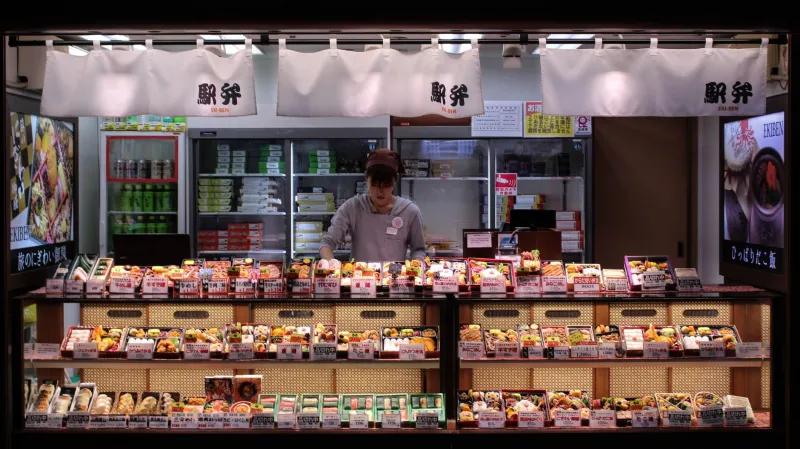
Bentō Boxes The bentō situation in a depachika is on another level entirely. These aren't sad desk lunches — they're architectural achievements. Look for regional varieties: a Kyoto-style bentō might feature delicate simmered vegetables and pickled plum rice, while a Yokohama selection could include shumai dumplings (a local specialty you absolutely cannot miss). Prices generally run between 800 and 2,000 yen, and they're perfect for eating in your hotel room when you inevitably wake up at 4 AM and need a real meal.
Wagashi and Seasonal Sweets Japanese confectionery is tied to the seasons in a way that has no real American equivalent. Visit in spring and you'll find cherry blossom-flavored mochi. Autumn brings chestnut and sweet potato everything. These sweets make incredible souvenirs because they're genuinely rare — the specific regional recipes, the seasonal ingredients, the artisan preparation methods simply don't exist outside Japan.
Pickles and Prepared Sides The tsukemono (pickle) section might not be your first instinct, but trust me on this one. A small container of properly fermented Japanese pickles alongside plain rice is one of the most restorative things you can eat when your body is fighting itself across time zones. They're also a fantastic window into regional flavor profiles.
Prepared Fish and Sushi Unlike the gas station sushi situation back home that we do not need to discuss, depachika sushi is genuinely excellent. Many vendors source fish daily from local markets, and the quality standard is kept high by fierce competition in the hall itself.
Why You Can't Just Recreate This Back Home
Every time I come back to the States, someone asks if there's anything like a depachika in the US. The honest answer is: not really, and probably not ever.
It's not just about the food quality, though that's real. It's about the entire cultural infrastructure that supports it. Japanese consumers expect perfection at every price point — a 300-yen onigiri is expected to be as carefully made as a 3,000-yen bentō. The presentation standards, the freshness standards, the service standards are all calibrated to a level of collective expectation that developed over decades. American retail food culture is moving in interesting directions, but the depachika is a product of something deeply specific to Japanese values around craft, hospitality, and the idea that everyday food deserves to be beautiful.
The next time someone tells you Japan is expensive, remember: you can eat extraordinarily well underground for less than ten dollars. And you can do it while still technically being in your pajamas mentally. That's not a travel hack. That's a cultural gift.