Yokohama's Hidden Creative Underground: The Subcultures American Tourists Never Find
The City Beneath the City
Yokohama has a postcard version. The glittering Minato Mirai skyline at night. The red lanterns of Chinatown. The nostalgic brick warehouses of the Aka Renga district. It's genuinely beautiful, and if that's all you see, you've still had a good trip.
But there's another Yokohama operating just underneath the tourist surface — one that most American travelers never find, partly because it doesn't advertise itself and partly because you have to know where to look. It's a city of quiet obsessives, underground creatives, and niche communities that have been quietly building something real for decades. And spending time in that world will completely reframe everything you thought you knew about Japanese culture.
Vinyl Culture: Where Crate Digging Becomes a Lifestyle
Let's start with records, because the vinyl scene in Yokohama is something else entirely.
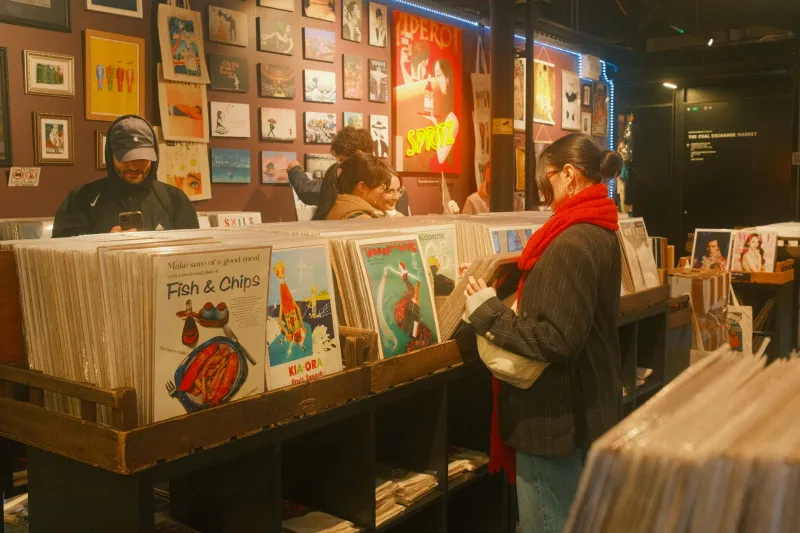
In the US, record collecting has had its revival moment — Urban Outfitters sells turntables, Record Store Day is a thing, your cousin just got into Fleetwood Mac. In Yokohama, the culture never needed reviving because it never died. There are shops in the Kannai and Isezakicho neighborhoods that have been operating since the 1970s, staffed by people who have spent literal decades building inventories that would make any serious collector weep.
What strikes American visitors who find their way in is the specificity. These aren't general-purpose music stores. One shop might focus exclusively on obscure 1960s soul and funk imports. Another carries nothing but Japanese jazz pressings from the Nippon Columbia catalog. A third is entirely dedicated to ambient and electronic music, organized in a system only the owner fully understands.
The collectors who frequent these places aren't just hobbyists — they're archivists. They can tell you the pressing plant, the matrix number, and the exact tonal difference between a Japanese domestic pressing and the UK original. It's the kind of deep, patient expertise that American culture tends to celebrate in theory but rarely sustains in practice.
The Indie Fashion Scene Nobody's Writing About
Yokohama's independent fashion community doesn't get the press that Tokyo's Harajuku or Shimokitazawa scenes do, and that relative obscurity seems to suit the designers just fine.
There's a loose network of small-batch clothing designers operating out of Yokohama — many of them running studios in the older residential neighborhoods south of the city center — who are doing genuinely interesting work. Their output isn't the maximalist cosplay-adjacent fashion that tends to get exported as the face of Japanese street style in Western media. It's quieter and harder to categorize: functional silhouettes built from unusual textiles, workwear-influenced pieces with subtle handcraft details, garments that look simple until you get close and realize the construction is extraordinary.
Finding them takes effort. Some sell through tiny physical shops with limited hours. Others operate almost entirely through Instagram and sell out of small pop-up events announced a few days in advance. A few have developed cult followings in the US and Europe without ever really trying to — their pieces circulate through resale platforms at multiples of the original price, bought by people who stumbled across them and couldn't believe something this considered existed.
If you want an entry point, the secondhand and consignment shops in the Kannai area occasionally carry pieces from local independent designers mixed in with vintage imports. It requires patience and a good eye, but the finds are real.
The Underground Music Circuit
Yokohama's live music scene operates on a scale that would seem almost impossibly small to anyone used to American venues. There are bars and basement spaces across the city — particularly in Kannai and around Sakuragicho — where you can watch genuinely accomplished musicians play for audiences of thirty or forty people, in rooms where the stage is barely elevated above the floor.
The genres are all over the place. Post-rock bands influenced by Mogwai and Godspeed You! Black Emperor. Jazz groups playing in a lineage that connects straight back to the Yokohama port jazz culture of the mid-twentieth century. Electronic producers doing live sets that feel closer to performance art than a DJ night. Noise artists who make music that challenges whether "music" is even the right word.
What's striking, if you come from an American context where underground culture tends to be loud about its underground-ness, is how low-key the whole thing is. There's no posturing, no scene politics on display, no one performing their alternative credentials for an audience. People show up, listen seriously, and go home. The music is the point.
Zine Culture and Print Communities
Physical print is not dead in Yokohama. Not even close.
There's an active zine and independent publishing scene here that operates through a combination of small print-run releases, occasional fairs, and a network of independent bookshops and cafes that carry local publications alongside more established titles. The content ranges from personal essay collections and poetry to photography zines, illustrated fiction, and deeply niche interest publications covering everything from local architecture history to obscure sports subcultures.
For American visitors, the language barrier is real — most of this material is in Japanese. But the visual culture of Japanese zine design is worth engaging with on its own terms. The layouts are often inventive in ways that feel genuinely distinct from Western graphic design traditions, and the production values on even low-budget publications tend to be remarkably high.
Why This Matters Beyond the Cool Factor
The standard Western narrative about Japan tends to land in one of two places: either the country is a hyper-conformist society where individuality gets suppressed, or it's a wonderland of weird subcultures and quirky pop culture exports. Both framings flatten something real.
What Yokohama's underground communities actually reveal is something more interesting: a culture where deep individual passion and collective social harmony aren't in conflict — they've just worked out a different relationship between the two. The vinyl obsessive isn't raging against the mainstream. The indie designer isn't making a political statement about conformity. They're just doing the thing they care about, with an intensity and craftsmanship that the mainstream doesn't always make room for.
That's not so different from creative subcultures anywhere. But in Yokohama, the whole thing runs quieter, deeper, and with a patience that feels genuinely countercultural in a world that keeps demanding everything be louder and faster.
The trick is slowing down enough to find it.