Inside the Konbini: How Yokohama's Corner Stores Became the Heartbeat of Japanese Daily Life
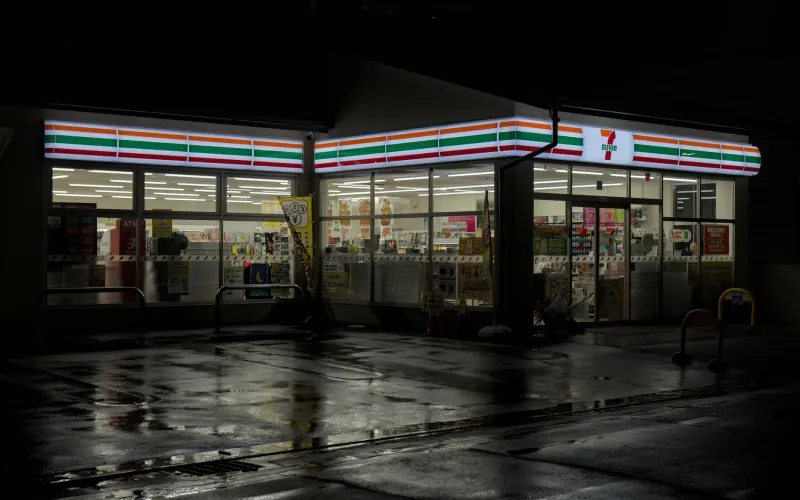
My first real konbini moment happened at 11:30 on a rainy Wednesday night in Yokohama. I'd been out longer than planned, my umbrella had performed its dramatic final collapse somewhere near Kannai Station, and I was damp, tired, and mildly defeated. I ducked into the nearest FamilyMart mostly for shelter.
Thirty minutes later, I left with a hot nikuman (steamed pork bun) from the warmer by the register, a perfectly decent bottle of sake, a pair of emergency socks (yes, really), a printed transit map I'd asked the cashier to help me find, and a seasonal sakura-flavored Frappuccino-style drink that had only been on the menu for four days. I also paid two utility bills at the register, because apparently you can do that.
This is what Americans get wrong about Japanese convenience stores: they think they already understand them.
The Konbini Is Not a Gas Station Snack Run
Back in the US, "convenience store" conjures a very specific vibe. Flickering lights. Questionable hot dogs rotating on a grill since the Clinton administration. A cashier behind bulletproof glass. You go in, you grab whatever's closest to the door, you leave. The whole experience is optimized for speed and low expectations.
In Japan, the konbini — short for convenience store, borrowed from English and thoroughly transformed — operates on an entirely different philosophical axis. There are roughly 55,000 convenience stores across Japan for a population of about 125 million people. That's one store for roughly every 2,200 people. In dense urban areas like Yokohama, you can sometimes see two 7-Elevens from the same street corner.
But density alone doesn't explain the cultural weight these places carry. The konbini in Japan is a genuine community institution in a way that's hard to overstate for American visitors.
Everything Works, and That's the Point
Walk into any konbini in Yokohama — 7-Eleven, Lawson, FamilyMart, the holy trinity — and the first thing you notice is that everything functions exactly as promised. The hot food is hot. The cold food is cold. The coffee machine produces a legitimately good cup of drip coffee for about 100 yen. The ATMs work with foreign cards (a relief that took me an embarrassing amount of time to discover). The bathrooms are clean. Disturbingly, immaculately clean.
This isn't accidental. It's the product of a customer service culture — omotenashi — that treats even a late-night chip purchase as a transaction worthy of full attention. Cashiers greet you when you walk in, thank you when you leave, and handle your onigiri wrapper with the same quiet efficiency you'd expect from a much fancier establishment. The first few times an employee bows slightly as you exit with your 150-yen coffee, it genuinely catches you off guard.
American visitors often make the mistake of responding to this warmth with American-style chatty friendliness — asking the cashier how their night's going, cracking jokes, trying to have a whole conversation. This is not wrong, exactly, but it can create a slightly awkward energy. The konbini interaction is warm but efficient by design. Appreciating it means matching its rhythm, not importing a different one.
Seasonal Drops Are Serious Business
If you want to understand how deeply Japanese consumers are invested in their konbini experience, watch what happens when a seasonal item drops.
Every major convenience store chain in Japan releases limited-time products tied to the seasons, holidays, and cultural moments throughout the year. Cherry blossom season brings sakura everything — sakura lattes, sakura mochi, sakura-flavored Pringles that shouldn't work but somehow do. Halloween triggers an entire horror-themed snack ecosystem. Christmas means strawberry shortcake and a very specific kind of cultural excitement that's entirely its own Japanese phenomenon.
People plan around these releases. Social media lights up. Items sell out. There's a genuine, enthusiastic consumer culture built around the konbini seasonal calendar that has no real American equivalent — unless you count the annual Pumpkin Spice Latte discourse, but even that's one product from one chain, not an entire seasonal rotation across thousands of stores.
I once watched a woman in her sixties photograph her Lawson seasonal Mont Blanc dessert from four different angles before eating it. She was completely correct to do so. It was gorgeous.
The Konbini as Social Infrastructure
Here's the part that really reframes how you think about these stores: in Japan, the konbini genuinely functions as a piece of public infrastructure.
Beyond food and sundries, Japanese convenience stores let you pay bills, receive packages, print documents, buy concert tickets, apply for certain government services, send faxes (yes, still), withdraw cash, and — in some locations — even pick up dry cleaning. During natural disasters, konbini chains have historically served as emergency supply points and community gathering spaces.
For older residents, particularly those living alone in urban areas like Yokohama, the daily konbini visit isn't just about buying a bentō. It's social contact. It's routine. It's a familiar face and a warm space. Some chains have implemented quiet check-in systems specifically to support elderly customers who might otherwise go days without meaningful human interaction.
This is a convenience store carrying the weight of a community center. That's a fundamentally different thing than a place to buy lottery tickets and a 64-ounce soda.
What to Actually Do When You Get There
For first-timers navigating Yokohama's konbini landscape, a few ground rules:
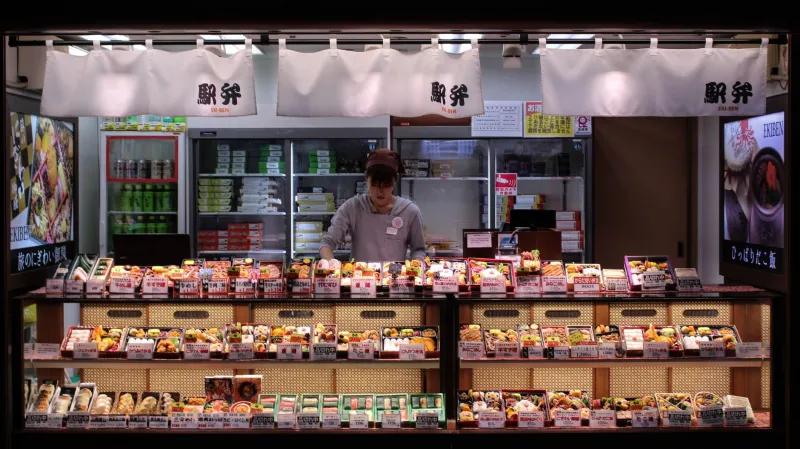
Get the onigiri. Every time. The triangular rice balls wrapped in seaweed are fresh, cheap, and regional variations exist that you can spend an entire trip exploring. The tuna-mayo is a classic. The mentaiko (spicy pollock roe) version is life-changing.
Use the coffee machine. The 7-Eleven coffee in Japan is legitimately good and costs almost nothing. There is no reason to be skeptical. Just do it.
Check the seasonal shelf first, always. Whatever's new this week will be gone in a month and possibly never return. This is not a drill.
And please, please bag your own items or at minimum be ready to. The cashier will ask if you want a bag, and the graceful move is to be prepared with an answer.
The konbini isn't just a stop on the way somewhere else. In Yokohama, it kind of is somewhere. Give it the time it deserves.