Naked, Confused, and Completely at Peace: How I Finally Figured Out Japanese Onsen Culture
Let me paint you a picture. It's my first week in Yokohama. A colleague suggests we wind down after work at a local onsen. I figure, how hard can it be? You take off your clothes, you get in the water, you relax. I've been to spas before. I've done hot tubs. I am, I tell myself, a culturally adaptable person.
Twenty minutes later, I am standing in a tiled room, completely naked, holding a very small plastic stool, with absolutely no idea what I'm supposed to do next.
This is the experience nobody talks about when they romanticize Japanese bathing culture in travel magazines. The reality of your first onsen visit — especially as a Westerner — involves a specific, low-grade panic that no amount of pre-trip research fully prepares you for. But here's what I've learned after several years of regular onsen visits in and around Yokohama: the rules make complete sense once you understand why they exist. And once they click, the whole experience transforms into something genuinely extraordinary.
What an Onsen Actually Is (Versus What Americans Think It Is)
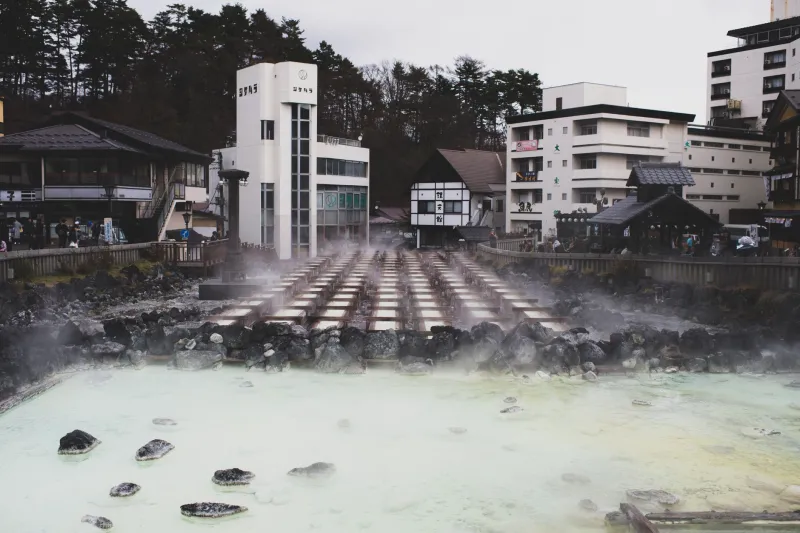
First, a quick clarification, because this matters. An onsen is a hot spring bath fed by geothermally heated water. Japan sits on an insane amount of volcanic activity, which means natural hot spring water is available in places you'd never expect — including urban Yokohama, which has several legitimate onsen facilities drawing water from deep underground.
A sento, by contrast, is a public bathhouse that uses regular heated water rather than mineral spring water. The two are often used interchangeably in casual conversation, and many facilities in Yokohama offer both. For our purposes, the etiquette rules apply to both environments.
What an onsen is not is a spa in the American sense. There's no attendant handing you a fluffy robe. There's no ambient playlist of pan flutes. There's no menu of add-on treatments. It's a communal bathing space, and the emphasis is on the communal part.
The Tattoo Question
Might as well address this one upfront because it's the first thing most Americans ask: yes, many traditional onsen in Japan prohibit tattoos. This is a real policy, not a myth, and it stems from the historical association between tattoos and organized crime in Japan. The rule is genuinely fading in urban areas and among younger generations, but it's still enforced at plenty of facilities.
Yokohama, as a cosmopolitan port city with a long history of international residents, tends to be more relaxed about this than rural areas. Several facilities in the city have explicitly updated their policies to welcome tattooed guests, particularly those that cater to foreign visitors. That said, call ahead or check the facility's website before you go. Finding out at the front desk is an uncomfortable experience for everyone involved.
The Small Stool: A Complete Explanation
Okay, back to the stool.
The bathing area in a Japanese onsen is divided into two distinct zones: the washing area and the soaking area. This distinction is the single most important thing to understand, and it's the thing Western visitors most consistently get wrong.
The soaking tubs — whether indoor mineral pools, outdoor rotenburo baths, or specialty tubs with jets or different temperatures — are for soaking only. You do not wash your body in the soaking tub. You do not bring soap or shampoo into the soaking tub. You enter the soaking tub already clean.
This is where the small stool comes in. Along the walls of the washing area, you'll find a row of individual stations, each with a small plastic stool, a handheld shower, and a set of faucets. You sit on the stool, use the handheld shower, and thoroughly wash your entire body before you get anywhere near the communal baths.
This isn't just a preference or a cultural quirk. It's the foundation of the entire onsen social contract. The water in the soaking pools is shared by everyone in that bath. Keeping it clean is a collective responsibility, and entering without washing first is considered genuinely disrespectful — the equivalent of, say, blowing your nose into a shared dish towel at someone's dinner party.
Once I understood that, the stool made complete sense.
The Other Rules, Explained With Context
Towels don't go in the water. You'll receive a small towel (or bring your own). This towel is for drying off and for modesty while walking between areas. It does not enter the bath. Most people fold it and place it on top of their head while soaking, which looks slightly ridiculous and is completely correct.
No phones in the bathing area. This one should be obvious, but it bears saying: photographing other bathers is a serious violation of privacy and trust. Leave your phone in the locker. This is non-negotiable.
Quiet voices, please. The onsen is not a social event in the American sense. People are not there to network or chat loudly. Soft conversation between people who came together is generally fine. Talking on the phone, playing music, or having a boisterous conversation across the room is not.
Don't drain the water when you sit on the bath's edge. This is a small one, but regulars notice. When you enter and exit the soaking pool, do so smoothly and try not to splash water out of the tub.
Rinse the stool and station when you're done washing. You're not the only one using it. A quick rinse with the handheld shower before you leave the washing area is standard courtesy.
The Philosophy Behind the Practice
Here's what took me the longest to really absorb: the onsen isn't primarily about physical cleanliness. Japanese bathing culture has deep roots in Shinto purification rituals, in the concept of misogi — the cleansing of the spirit alongside the body. The communal bath is, in a very real sense, a place where social hierarchies dissolve. Everyone is equal in the water. The salaryman and the retired fisherman and the young woman on her lunch break are all just people, soaking in the same mineral water, breathing the same steam.
There's a word, hadaka no tsukiai, that roughly translates to "naked communion" — the idea that stripping away clothing strips away pretense, and that genuine human connection becomes easier when nobody's performing their social role. It's a concept that sounds almost absurdly earnest until you've actually experienced it, sitting in a quiet outdoor bath in Yokohama with steam rising into the cold night air, and felt your entire nervous system finally, genuinely let go.
Yokohama's Onsen Scene: Where to Start
Yokohama has a solid range of onsen and sento facilities, from neighborhood bathhouses that have been running for generations to newer, more polished spa complexes near the waterfront. If you're visiting for the first time and want a slightly more beginner-friendly environment, look for facilities that explicitly list English signage or have staff accustomed to foreign guests — several exist in the Minato Mirai and Noge areas.
For a more local, less curated experience, the neighborhood sento in areas like Koganecho or Isezakicho are the real deal — older buildings, regulars who've been coming for decades, and an atmosphere that feels genuinely lived-in.
Either way, go in the evening. Go with an open mind. Sit on the stool, wash thoroughly, and then lower yourself into the water slowly.
By the time you've been soaking for about ten minutes, I promise, the awkwardness will be the last thing on your mind.