Tokyo Gets the Glory. Yokohama Gets the Soul.
Let me tell you what happens when you tell people back home you're living in Yokohama.
They squint a little. "Is that... near Tokyo?" Yes, technically. About 30 minutes by train, depending on where you're headed. But here's the thing nobody bothers to explain: being near Tokyo and being like Tokyo are two entirely different situations. And the gap between those two things is exactly where Yokohama lives — and honestly, where it thrives.
Tokyo is a spectacle. It's built for arrival. The moment you step out of Shinjuku Station or wander through Shibuya crossing, you feel like you've walked onto a set that's been designed specifically to make you feel the weight of Japan. It's overwhelming and gorgeous and relentless. It's also, in a very specific way, performing.
Yokohama doesn't perform. That's the whole thing.
A Port City With Nothing to Prove
Yokohama's identity was forged in the mid-1800s, when Japan cracked open its doors to foreign trade and this particular stretch of coastline became the country's main point of contact with the outside world. Americans, Europeans, Chinese merchants — they all poured through here. The city absorbed them, built around them, and developed a character that was never purely, exclusively Japanese in the way Tokyo or Kyoto were.
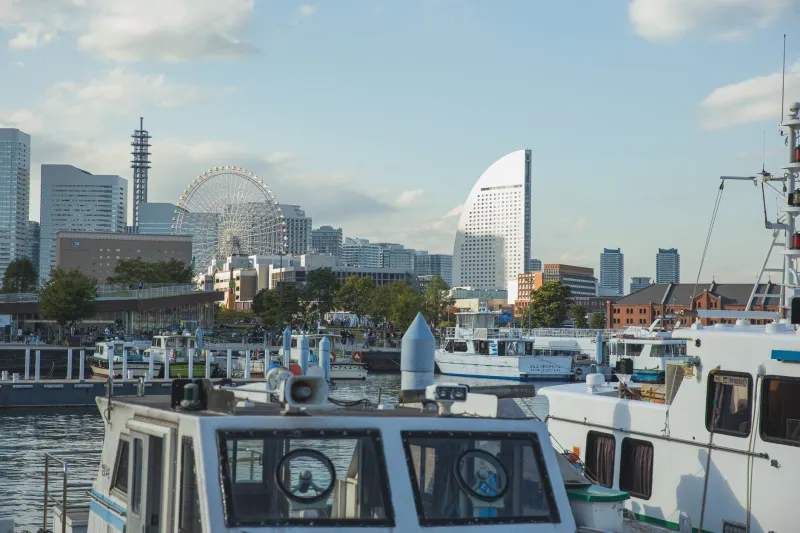
That history is still visible everywhere. Yamate, the hilly neighborhood where foreign diplomats and traders once lived, still has old Western-style houses tucked between narrow residential streets. Chinatown — the largest in Japan — has been a working, breathing community here for over 150 years, not a theme park attraction. The waterfront, once a gritty industrial port, has been redeveloped into something livable without being scrubbed clean of its origins.
There's no imperial palace here. No ancient temples that anchor the city's mythology. Yokohama was always a city of commerce, immigration, and hustle — which means it never had the luxury of being precious about itself.
What That Feels Like on a Tuesday Morning
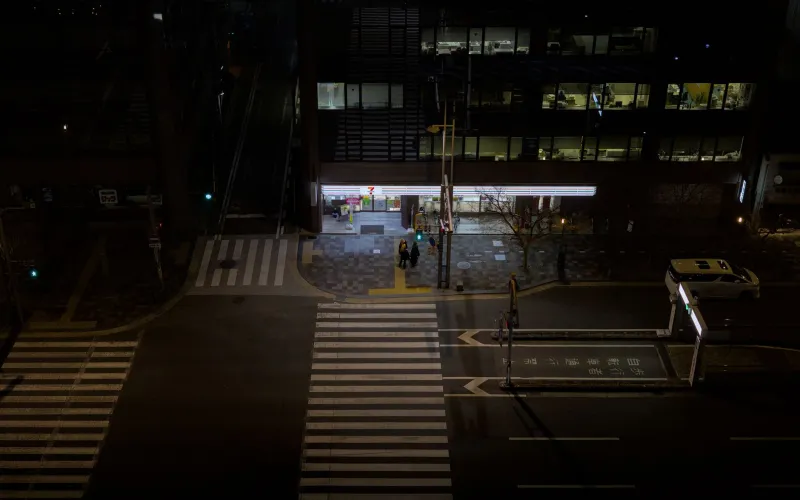
Here's something that surprised me early on: Yokohama has neighborhoods that feel genuinely residential in a way that's hard to find in central Tokyo. Not just residential as in "people technically live here" — but residential as in, you can hear the rhythm of daily life happening around you without anything trying to sell you something.
I'm talking about the kind of shotengai — those covered shopping streets — where the dry cleaner has been in the same spot for forty years and the owner knows which day you drop off your shirts. Where the ramen shop around the corner from the station has seven seats, no English menu, a laminated photo board that's been there since the '90s, and a line out the door at 11:45 AM every single day.
Yokohama's ramen culture, by the way, deserves its own entire conversation. The city has its own style — ie-kei ramen, a rich, tonkotsu-soy hybrid that's thicker and more aggressive than what you'd find in Tokyo's trendy shops. It's working-class food. It was invented here, in a noodle shop in Kanagawa, and it spread through the city's dockworker and factory-worker culture before anyone thought to make it photogenic for Instagram. When you eat it now, you're not eating a curated experience. You're eating something that was built for people who needed to get back to work.
That's Yokohama in a bowl, honestly.
The Immigrant Layer Nobody Talks About
One of the things that sets Yokohama apart from almost anywhere else in Japan is how visibly multicultural it is — not in a performative, "look how international we are" way, but in the quieter, more lived-in sense of a place where different communities have simply existed alongside each other for generations.
Naka Ward, where Chinatown sits, bleeds into neighborhoods with Korean restaurants, Brazilian lunch spots, and halal grocery stores. You'll hear Mandarin, Cantonese, and Tagalog on the same block. The city's international population isn't a novelty — it's structural. It's been here longer than most American cities have existed in their current form.
For Western visitors who arrive expecting Japan to be a monolith of uniformity, Yokohama is quietly disorienting in the best possible way. It complicates the narrative. It suggests that "Japanese culture" was never a single, sealed thing — that it has always been in conversation with the outside world, absorbing and adapting and pushing back.
Why Tokyo Guidebooks Keep Missing It
Here's the uncomfortable truth: most Western travel content about Japan is really travel content about Tokyo, with Kyoto tacked on for the temples. Yokohama barely registers as a destination in its own right. It shows up as a day trip suggestion, a footnote, a "while you're in the area."
And I get it, from a content perspective. Tokyo is easier to package. It has the density of experiences that generates listicles and TikToks and breathless travel essays. It gives you the aesthetic hits quickly.
But that packaging comes at a cost. What it produces is a version of Japan that's been optimized for arrival — for the first-timer's gasp, for the "I can't believe this place is real" sensation. It doesn't give you Japan as a place where people just... live. Where they're tired after work, where they argue about what to have for dinner, where they have complicated feelings about their city's identity and their country's history.
Yokohama gives you that. Not always comfortably, not always accessibly — but genuinely.
Settling In vs. Passing Through
The difference between visiting Tokyo and actually settling into Yokohama is the difference between watching a movie and renting an apartment in the neighborhood where it was filmed. One is a complete, curated experience. The other is just life — slower, stranger, more demanding, and ultimately more real.
I've watched people come through Yokohama on their way to somewhere else and miss it entirely. They see the waterfront, they hit Chinatown for soup dumplings, they take a photo of the red brick warehouses at Minatomirai, and they leave thinking they've seen it.
They haven't seen it. They've seen the part of Yokohama that was built for looking at.
The rest of it — the residential backstreets of Isogo, the quiet shrines tucked between apartment blocks in Hodogaya, the izakayas in Kannai where nobody speaks English and nobody minds — that part takes time. It takes showing up repeatedly, being confused, making small mistakes, and slowly building the kind of familiarity that can't be rushed.
That's the Yokohama paradox, really. The city that gets overlooked in favor of Japan's bigger, louder, more photogenic neighbor is also the city that rewards you most for staying. Tokyo will always be there, doing its thing, being spectacular.
But Yokohama? Yokohama will eventually just let you be a person in it.
And somehow, that ends up meaning everything.