Cute Was Never the Point: How Yokohama's Alt Underground Is Dismantling Japan's Kawaii Machine
Western culture treats kawaii like a harmless aesthetic export — pastel palettes, round eyes, tiny everything. It shows up on TikTok as a vibe, in Target aisles as stationery, in American bedrooms as a Pinterest mood board. Cute, soft, unthreatening.
But spend enough time in Yokohama's underground fashion circles and you start to realize that cuteness in Japan has always carried weight. And the people pushing back against it are doing something far more radical than just choosing a different outfit.
What Kawaii Actually Costs
Here's the thing nobody tells you when you first fall in love with Japanese cute culture: kawaii isn't just an aesthetic. It's a social contract.
In Japan, being perceived as kawaii — soft, agreeable, non-threatening, appropriately childlike — has historically been a survival strategy, particularly for women. You round your vowels. You cover your mouth when you laugh. You make yourself small and pleasant and easy to be around. The cuteness isn't incidental. It's the point. It communicates harmlessness in a society that has very specific ideas about who gets to take up space and how.
Yoko, a 29-year-old vintage clothing dealer who runs a cramped, magnificent shop near Noge, put it to me bluntly: "Kawaii is how you disappear politely. You become decorative. You stop being a person with opinions and become something people want to look at."
She said it without bitterness, which somehow made it land harder.
The Underground Doesn't Look Like You'd Expect
When most Americans picture Japanese alternative fashion, they picture Harajuku — the cosplay excess, the Fruits magazine era, the maximalist chaos that briefly became a Western obsession in the early 2000s. That stuff is real, and it's genuinely interesting, but it's also been largely absorbed into the tourism economy. It's performative rebellion that's been given its own designated street.
Yokohama's underground is different. It's quieter, more deliberate, and — honestly — harder to find if you don't know where to look.
The scene clusters around a handful of vintage shops, independent zine publishers, and small live music venues scattered across neighborhoods like Koganecho, Kannai, and the grittier edges of Isezakicho. The aesthetic isn't uniformly dark or aggressively anti-cute. It's more fragmented than that. Some of it looks like deconstructed workwear. Some of it borrows from 1990s Japanese street fashion in ways that feel almost archival. Some of it is deliberately ugly — not in a careless way, but in a way that seems to be asking you something.
Ken, a graphic designer in his early thirties who also makes clothing under a name he asked me not to print, described his work as "making things that don't want to be loved immediately." He laughed when he said it, but he also clearly meant it.
When Cuteness Becomes a Political Statement
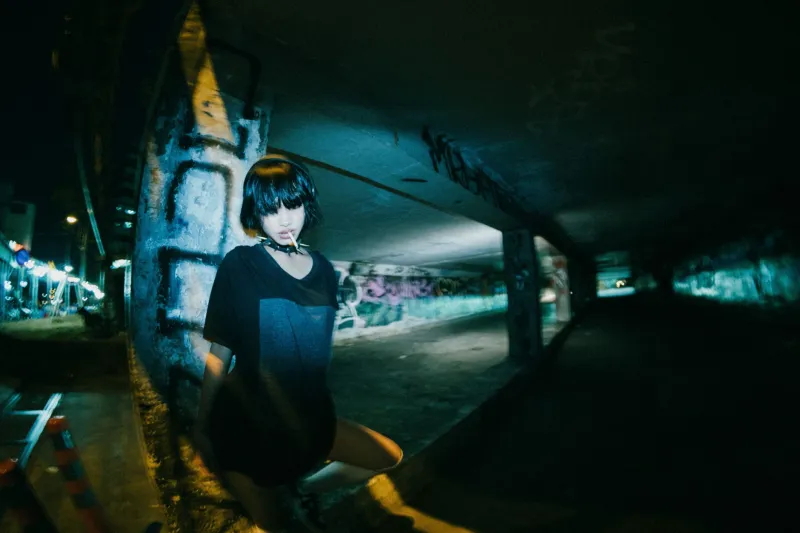
There's a specific subset of Yokohama's alt scene that engages with kawaii directly — not by rejecting it wholesale, but by distorting it. Think cute imagery with the proportions slightly wrong. Pastel colors combined with aggressive or uncomfortable text. Childlike silhouettes that, on closer inspection, are referencing something darker.
If you grew up in the US, you might recognize this move from American punk or riot grrrl culture — the reclamation of "feminine" aesthetics as a vehicle for something more confrontational. But the context is different here, and the stakes feel different too.
In Japan, where social conformity operates at a pressure level most Americans genuinely cannot imagine, fashion deviation isn't just self-expression. It's a public declaration that you have opted out of something. And opting out has consequences — in professional settings, in family dynamics, sometimes in basic social functioning.
Mai, a 26-year-old who makes zines and occasionally models for independent designers, told me she started dressing the way she does after years of feeling like her personality was literally being edited out of existence by workplace and social expectations. "In Japan, you learn very young that being too much of anything — too loud, too weird, too sad, too happy — makes people uncomfortable. Kawaii is the safe version of femininity. It's the version that doesn't ask anything of anyone."
Her current look involves a lot of asymmetry, deliberately mismatched textures, and what she describes as "things that look like they were put together by someone who was angry." She's warm and funny in person. The clothes aren't a costume. They're a position.
What Yokohama Specifically Has to Do With It
This isn't just a Tokyo story, and the fact that it's happening in Yokohama matters.
Yokohama has always occupied a slightly different cultural position within Japan — historically a port city, a place where outside influences arrived first, where a certain cosmopolitan restlessness has been baked into the identity for over a century. The city doesn't have Tokyo's relentless cultural gravity. Things can develop here with a little more breathing room.
Several of the people I spoke with mentioned that they'd deliberately not moved to Tokyo, or had moved back from Tokyo, because the pressure there felt suffocating in a different way. Yokohama's underground has a lower profile, which paradoxically gives it more freedom. Nobody's trying to make it into a tourist attraction. Nobody's written the magazine piece yet.
Yoko's vintage shop, for instance, doesn't have an Instagram presence. She gets customers through word of mouth and the occasional handwritten flyer. "If you need to find us, you'll find us," she said. That's not mystique for its own sake. It's a genuine preference for operating outside the attention economy.
What Americans Get Wrong About This
The easiest American misread of all this is to romanticize it — to treat it as the cool, edgy counterpart to the kawaii content that's already been packaged for Western consumption. Underground Japanese fashion as aesthetic content. The rebellion as product.
But that completely misses what makes it interesting. This isn't about looking different for its own sake. It's about the specific, exhausting, socially enforced pressure to be palatable that exists in Japanese life — and what it looks like when people decide, quietly and deliberately, that they're done with it.
The designers and shop owners and zine-makers I met in Yokohama aren't trying to export anything. They're not building a brand. They're building, in small and imperfect ways, a space where they don't have to perform softness they don't feel.
For a Western audience that's spent years treating kawaii as a consequence-free aesthetic import, that context is worth sitting with. Cute was never just cute. And the people who know that best are the ones who grew up inside it.