Forget Tokyo Ramen — Yokohama's Smoky Back-Alley Bowls Are Playing a Completely Different Game
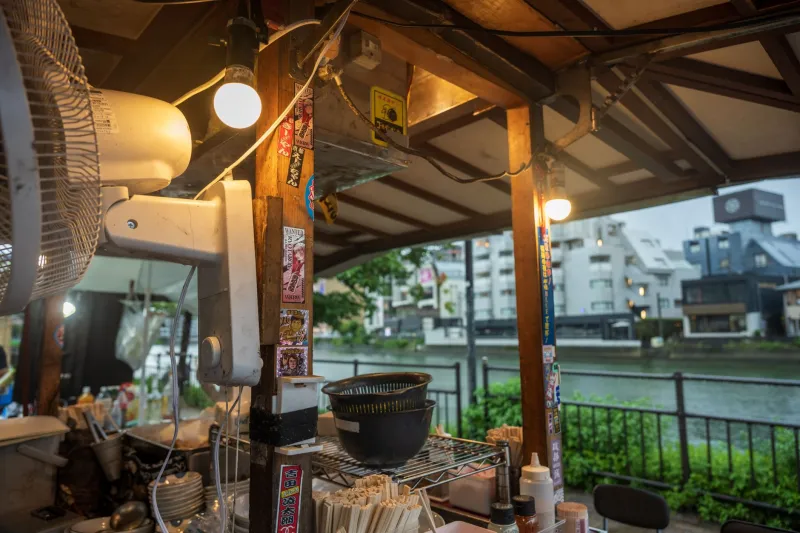
The first time I walked into Yokohama's Ramen Yokocho, I almost walked right back out. It's not exactly what you'd call welcoming in the Instagram-friendly sense. The ceiling is low, the lighting is the color of old mustard, and the combined smell of pork bone broth and cigarette smoke hits you like a warm, slightly aggressive hug. A guy at the counter of the third stall didn't look up from his bowl. The cook didn't smile. And yet, within about four minutes of sitting down on a cracked vinyl stool with a steaming bowl of ie-kei ramen in front of me, I understood completely why people fly across the Pacific for this.
But here's the thing most travel guides won't tell you: Yokohama's ramen culture isn't just a regional variation on what you'll find in Tokyo. It's a different philosophy altogether.
Two Cities, Two Completely Different Relationships With Noodles
Tokyo's ramen scene is, without question, extraordinary. The city has elevated the humble noodle bowl into something approaching high art — Michelin-recognized shops, hours-long queues, chefs who've spent decades perfecting a single broth. There's a reverence to it, almost a formality. You study the vending machine menu before you sit down. You don't talk too loudly. You eat with focus.
Yokohama does not care about any of that.
The port city's relationship with ramen is grittier, more working-class, and honestly more fun. Yokohama is where ie-kei ramen — that thick, tonkotsu-shoyu hybrid with chewy flat noodles and a pool of chicken fat floating on top — was born, specifically at a shop called Yoshimuraya in the 1970s. The style spread through the city's harbor neighborhoods the way good things tend to spread: through dock workers, truck drivers, and people who needed something cheap, filling, and deeply satisfying at the end of a long shift.
That DNA is still very much present in Ramen Yokocho today.
What Ramen Yokocho Actually Is (And Isn't)
Located near Yokohama Station's west exit, Ramen Yokocho — sometimes called Ramen Alley by locals — is a narrow covered passageway lined with somewhere between eight and ten tiny ramen stalls, depending on who's open that day. Each one seats maybe a dozen people. Some have curtain dividers between seats. Most have menus written on paper taped to the wall.
This is not a tourist attraction that has been dressed up to look authentic. It is authentic, which is a meaningfully different thing.
The stalls have been there, in various iterations, since the postwar reconstruction era, when street food vendors clustered around transportation hubs to feed the city as it rebuilt itself. Ramen Yokocho survived urban development, economic booms, and the rise of slick modern ramen chains because its regulars — the actual Yokohama residents who've been eating there for decades — kept showing up. The food tourists came later, and the alley absorbed them without changing its personality one bit.
The Broth Wars: Why Ie-Kei Ramen Is Yokohama's Culinary Flag
If you're coming from the States and your ramen education has mostly consisted of Momofuku Noodle Bar in New York or a solid tonkotsu spot in your city, ie-kei is going to require a small recalibration.
It's not the clean, almost delicate shoyu broth you get in Tokyo's classic shops. It's not pure Hakata-style tonkotsu either, though the pork bone base is definitely in there. Ie-kei is a hybrid — thick, a little muddy in the best possible way, soy-forward, with an umami depth that takes most people about three spoonfuls to fully process. The noodles are flat and wide, the toppings are minimal (spinach, nori, chashu pork, a soft egg if you're lucky), and there's often a small dish of pickled vegetables on the side.
You can customize the richness of the broth, the firmness of the noodles, and the amount of garlic. The stall operators will ask you, briefly and without ceremony. Answer confidently.
A Westerner's Honest Experience
I'll be straight with you: the first time I tried to navigate Ramen Yokocho alone, I sat down at the wrong stall, ordered by pointing at something I couldn't read, and ended up with a bowl that was significantly spicier than I'd anticipated. The guy next to me — a salaryman who had clearly been eating at this exact spot for years — glanced over, saw my expression, and silently slid a small pitcher of water toward me without a word.
That interaction is, I think, a pretty good summary of what makes this place special. Nobody's performing hospitality. Nobody's trying to make your experience Instagrammable. But there's a genuine, unspoken community here — a shared understanding that you're all just people who want a good bowl of ramen.
For Western visitors used to the American dining experience, where servers are trained to check in constantly and make you feel attended to, Ramen Yokocho can feel almost cold at first. It isn't. It's just honest.
How to Do It Right
A few practical notes if you're planning to visit:
Go later in the evening. The alley really comes alive after 7 or 8 PM when the after-work crowd shows up. The energy is completely different from a lunchtime visit.
Don't overthink the stall selection. Seriously, most of the shops are good. Pick the one with the most locals in it and sit down.
Bring cash. Several stalls are cash-only, and the nearest ATM that reliably accepts foreign cards is back toward the main station.
Eat at the counter if you can. Watching the cook work in a space barely bigger than a walk-in closet, producing bowl after bowl with zero wasted movement, is its own kind of entertainment.
Skip the photo shoot. Take one picture if you need to, then put your phone away and actually eat the ramen while it's hot. This is non-negotiable.
Why Yokohama's Food Identity Deserves More Credit
Yokohama has always lived a little in Tokyo's shadow, at least as far as international visitors are concerned. The two cities are 30 minutes apart by train, and most tourists treat Yokohama as a day trip rather than a destination — a quick swing through Chinatown and a look at the harbor before heading back to the capital.
That's a shame, because Yokohama's culinary identity is genuinely distinct, shaped by its history as Japan's first major international port. The city absorbed influences from China, America, and Europe earlier and more deeply than almost anywhere else in Japan, and that openness created a food culture that's simultaneously very Japanese and totally its own thing.
Ramen Yokocho is the most concentrated expression of that identity. It's not trying to be Tokyo. It's not trying to be a museum piece of old Japan. It's just Yokohama — unpretentious, hardworking, and quietly, stubbornly excellent.
That's more than enough reason to make the trip.