Why Japan Still Runs on Paper Money — And What That Says About Everything
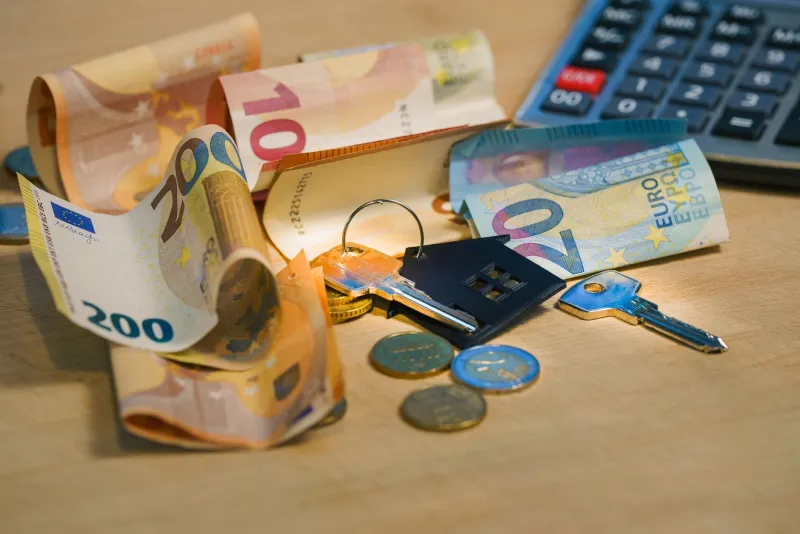
My first week in Yokohama, I walked into a perfectly modern-looking restaurant, ate a perfectly excellent meal, and confidently tapped my Visa card on the reader by the register. The cashier looked at me with the patient expression of someone who has explained this many times before, pointed to a small handwritten sign I had completely missed, and said, quietly, genkin nomi — cash only.
I had about 400 yen in my wallet. Dinner was 1,800.
This scene, or some version of it, plays out for almost every Western visitor to Japan at least once. It is disorienting in a very specific way — not because the country is backward (it absolutely isn't), but because the gap between Japan's technological sophistication and its financial habits is so wide that it genuinely doesn't compute. How does the country that gave us the Shinkansen and the Roomba still run on envelopes of cash?
The answer is more interesting than "they just haven't caught up yet."
The Numbers First, Because They're Wild
Let's establish the scale of this thing. Japan consistently ranks among the most cash-dependent economies in the developed world. Even as contactless payments have grown — and they have, particularly since the pandemic — surveys regularly show that a significant portion of Japanese consumers still prefer cash for everyday transactions. In a country with a population that's deeply tech-literate and surrounded by some of the most sophisticated consumer electronics on earth, this isn't inertia. It's a choice.
For comparison: in the US, we've been sprinting toward cashlessness for years. Venmo, Apple Pay, tap-to-pay, buy-now-pay-later — American financial culture has been steadily dissolving the physical act of payment into something invisible and frictionless. Many American businesses now actively discourage cash, and some don't accept it at all.
Yokohama, meanwhile, will sometimes ask you to please bring exact change.
It's Not About the Technology
The easy explanation — that Japan is technologically behind in financial infrastructure — falls apart pretty quickly when you spend time here. The country has sophisticated IC card systems like Suica and Pasmo that let you tap through train gates and convenience store checkouts with your phone. QR code payment apps exist and work well. ATMs are everywhere, open late, and almost insultingly easy to use.
The infrastructure for going cashless is largely in place. The cultural appetite for it is just... different.
A lot of this comes down to trust, but not the kind Americans usually mean when they talk about financial trust. In the US, we've outsourced trust to institutions — banks, card networks, fraud protection systems. We pay digitally because we trust the system to catch errors, reverse charges, protect our data (or at least try to).
In Japan, trust tends to be more personal and more concrete. Cash is trusted because it is certain. There's no dispute about whether the payment went through. No chargebacks, no processing errors, no "the system is down today." You hand over the money, you receive the goods, the exchange is complete and unambiguous. That clarity has real cultural value here.
The Ritual of Paying
Spend enough time watching how cash transactions actually work in Yokohama and you start to notice something: paying for things is treated with a low-level formality that feels almost ceremonial by American standards.
Cashiers count your change back to you carefully, out loud, and present it on a small tray rather than slapping it into your palm. Bills are handled with something approaching reverence — crisp, unfolded, oriented the same direction. When you pay for something significant, like rent or a large purchase, it's often done in an envelope, handed over with two hands. The physical act of payment is legible, intentional, witnessed.
Compare this to tapping your phone on a reader while barely breaking eye contact with your own screen, and you start to understand that something genuinely different is happening here at a cultural level. Cash in Japan isn't just a payment method. It's a form of communication. It says: I am taking this seriously. This exchange matters.
What Americans Are Actually Losing
Back home, we've sold ourselves on the frictionlessness of digital payments as a pure upgrade — faster, cleaner, more convenient. And it is all of those things. But frictionlessness has a cost that we don't always account for.
Studies on consumer psychology have consistently shown that paying with cash creates a stronger psychological imprint of spending than digital payment does. When money is abstract — a number that changes on a screen — it's easier to lose track of what you're actually exchanging. The physical act of handing over bills creates a moment of reckoning that tap-to-pay quietly eliminates.
Japan's cash culture keeps that moment intact. Whether intentionally or not, it maintains a relationship between people and their money that feels healthier, in some ways, than the frictionless void we're building in America.
Practical Notes for the Cash-Confused Visitor
If you're heading to Yokohama, here's what actually matters: carry cash, always. Not a little — a reasonable amount. 7-Eleven ATMs (yes, the convenience stores) reliably accept foreign cards and have English interfaces, and there are several in every neighborhood. Many smaller restaurants, traditional craft shops, and local markets are cash-only, and the signage is not always in English.
Also: ¥1,000 and ¥10,000 bills are your workhorses. And yes, you will accumulate a truly absurd number of coins, because everything from vending machines to train fares to temple offerings runs on them. Get a small coin purse. You'll thank yourself.
The Envelope Under the Mattress, Reconsidered
There's a concept in Japan called tansu yokin — literally "chest of drawers savings" — which refers to the practice of keeping cash at home rather than in a bank. Estimates suggest that hundreds of billions of yen sit in Japanese homes in literal envelopes and boxes. By American financial logic, this is irrational. By the logic of a culture that values tangible, certain, personally controlled resources, it makes a different kind of sense.
I'm not suggesting we all start hiding money in our furniture. But there's something worth sitting with in the fact that an entire culture of highly educated, technologically sophisticated people looks at the cashless future being built in places like the US and says, collectively: we're not sure we want that.
Yokohama's cash culture is inconvenient sometimes. It's made me run to an ATM at inopportune moments more than once. But it's also made me think harder about what payment actually is — what it means to exchange value with another person, and whether making that exchange invisible and instantaneous is the unambiguous improvement we've been telling ourselves it is.
Some things, it turns out, are worth the friction.