Surrounded by Millions, Known by None: The Strange Solitude of Life in Yokohama
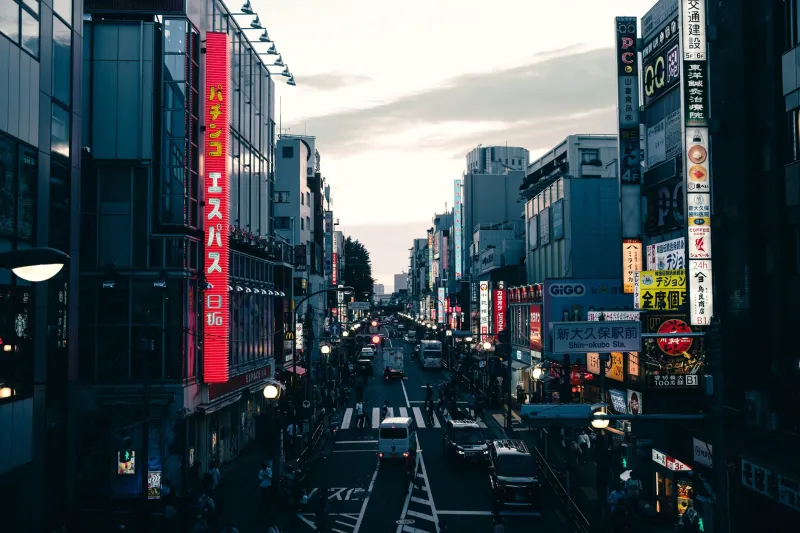
There's a moment that happens to almost every Westerner who moves to Japan, usually somewhere around the three-month mark. The novelty has worn off just enough. You've figured out the trains, you've stopped bowing at the wrong angle, you've even memorized your konbini order without fumbling. Life is running smoothly. And then, one perfectly ordinary Tuesday, you sit down in your apartment and realize you haven't had a real conversation — the kind where someone actually asks how you're doing and means it — in over a week.
Welcome to the loneliness paradox.
Yokohama is not a cold city. That's what makes this so disorienting. People here are unfailingly polite, reliably helpful, and impressively considerate of the strangers around them. But politeness and warmth are not the same thing. And somewhere in the gap between those two qualities lives one of the most quietly jarring experiences of expat life in Japan.
The Architecture of Beautiful Distance
American social culture is, by global standards, aggressively open. We make small talk with strangers in grocery store lines. We overshare with our Uber drivers. We treat first meetings like auditions for friendship. It's a little chaotic, sometimes exhausting, occasionally fake — but it creates a constant low hum of human contact that most of us don't even notice until it's gone.
Yokohama operates on a completely different social frequency. Interactions here are precise. They serve a function. A shop assistant will assist you with genuine warmth and then, the moment the transaction concludes, that warmth folds neatly back into professional distance. It's not rudeness. It's actually a form of respect — an acknowledgment that your time and space matter, that you're not obligated to perform friendliness on demand.
But for someone raised in a culture where the line between stranger and acquaintance collapses within about four minutes, it can feel like running your hands along a beautifully finished wall looking for a door that isn't there.
Proximity Without Intimacy
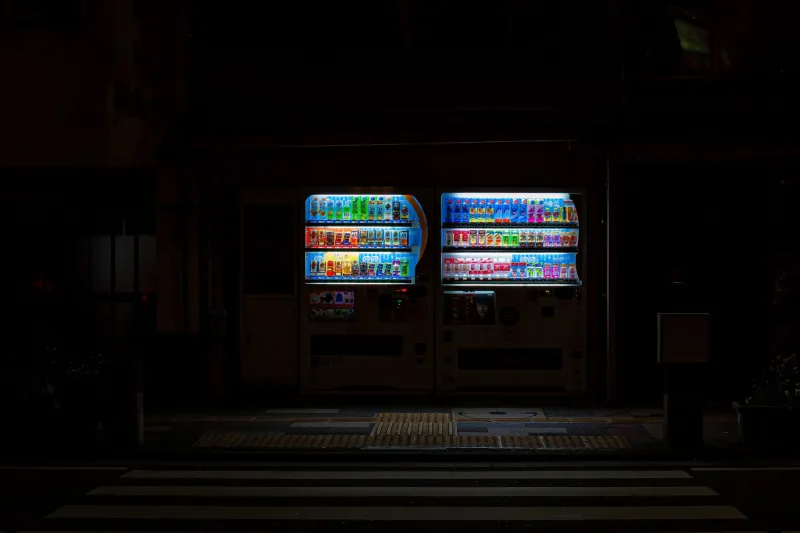
Here's the thing that really messes with your head: you are never actually alone in Yokohama. The city is dense in a way that American cities — even New York — don't quite replicate. On the Minato Mirai waterfront on a weekend afternoon, you're shoulder-to-shoulder with thousands of people. The train at rush hour is a study in enforced physical closeness. My apartment building has thin walls, and I know my neighbors' morning routines better than I know their names.
And yet.
Japanese social norms create a kind of invisible insulation around each person. Eye contact is brief. Unsolicited conversation is rare. The default setting in public is a kind of collective, respectful withdrawal — everyone agreeing, without discussion, to occupy the same space without imposing on each other. It's genuinely impressive as a social technology. It's also, if you're not used to it, quietly devastating.
American loneliness tends to be about physical isolation — living too far from people, working from home, moving to a new city. Japanese loneliness, or at least the version that expats experience, is something stranger: isolation in the middle of a crowd, solitude as a feature rather than a bug.
What Yokohama Taught Me About American Community
Spending enough time sitting with this feeling eventually flips something in your perspective. You start to look back at American social culture differently — not with uncomplicated nostalgia, but with new questions.
American friendliness is real, but it's also, often, performed. We're trained to be likable, to seem open, to project warmth even when we're not feeling it. The result is a culture that's very good at the appearance of connection and sometimes surprisingly bad at the substance of it. We have a thousand acquaintances and not enough people to call at 2 a.m.
Japanese social culture inverts this almost entirely. The surface is reserved, but the relationships that do form tend to run deep. The colleagues who invite you to dinner after six months of polite professional distance will, once you're in, treat you like family. The trust that takes longer to build seems to last longer once it's there.
Neither system is obviously better. Both are solving for something real.
Finding the Cracks in the Wall
The expats who seem to thrive here — really thrive, not just survive — tend to share a few things in common. They find a community that has its own internal culture: a running club, a jazz bar with regulars, a neighborhood izakaya where the owner remembers your drink. They stop waiting for connection to happen the American way and learn to recognize what it looks like when it's being offered Japanese-style, which is quieter and requires more patience.
I've started to notice these moments more. The elderly man at the Motomachi shotengai who now gives me a small nod when I pass. The woman at my local sento who, after months of parallel silence, once handed me a towel without being asked and said nothing, which somehow said everything. The rhythms of acknowledgment that don't look like friendship until you've been here long enough to understand the language they're written in.
Yokohama will not throw its arms around you. It will not ask about your weekend or your feelings or your plans. But it will, over time, quietly make room for you in a way that turns out to be its own kind of welcome.
The Paradox Is the Point
The loneliness that Yokohama hands you in those early months is real, and I don't want to romanticize it into something it isn't. It's genuinely hard. It makes you question things about yourself and about what you actually need from other people.
But it also teaches you something that American culture doesn't always have the quietness to teach: the difference between connection and contact. Between being seen and being surrounded. Between a community that holds you and a crowd that absorbs you.
Six million strangers, and some days I feel all of them. Some days I feel none of them. The trick, I'm slowly learning, is that both of those experiences are Yokohama telling you something true.