Reading the Room, Japanese Style: The Unspoken Language That Changed How I See Everything
I used to think I was a pretty decent communicator. I grew up in the Midwest, where people say what they mean, mean what they say, and generally appreciate it when you do the same. Direct. Clear. Efficient. I thought that was just... good communication.
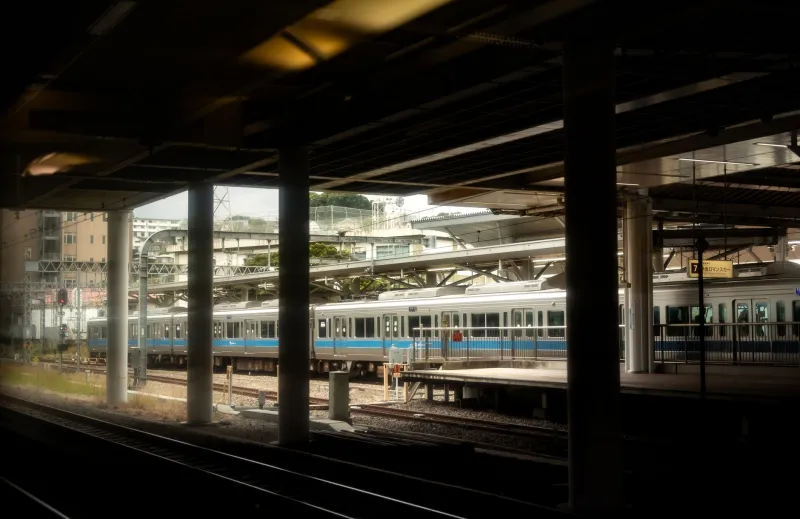
Then I moved to Yokohama, and I spent the first three months accidentally offending people I didn't even realize I was offending.
The thing nobody warns you about before you land in Japan is this: a huge portion of what people are actually saying to you is never spoken out loud. Not even close. There's an entire parallel conversation happening beneath the surface of every interaction — at the konbini counter, in the office, at a dinner with new friends — and if you don't know how to tune into that frequency, you're basically showing up to a concert and only hearing half the instruments.
The Silence Isn't Awkward. It's Doing Work.
Back home, silence in a conversation feels like a problem to solve. Someone stops talking and your brain immediately scrambles to fill the gap. We're trained to treat quiet as a malfunction.
In Yokohama, I had to completely unlearn that reflex.
Here, silence often is the answer. When I'd ask a colleague a question and they'd go quiet — not uncomfortable quiet, just... quiet — I initially read it as confusion, or maybe disapproval. I'd rush in to rephrase, to clarify, to fix whatever I'd broken. What I didn't understand was that the pause itself was the response. A long, considered silence frequently signals something like that's complicated or I'm not sure I can agree with that or sometimes just a gentle, diplomatic no.
Once I stopped treating silence as a vacuum that needed filling, whole conversations opened up. I started hearing what wasn't being said. It's a strange skill to develop, but once you have it, it's almost like getting a new sense.
The Gentle Art of the Non-Committal
Americans love a clear yes or no. We're a culture that built entire industries around decisiveness — self-help books, leadership seminars, negotiation workshops. We celebrate people who "say it like it is."
Japan has a different philosophy entirely, and nowhere is this more visible than in how people decline things.
In Japanese social culture, a direct "no" can feel almost aggressive — unnecessarily blunt in a way that damages the relationship between the people involved. So instead, there's an elaborate, beautiful, genuinely sophisticated system of soft refusals that most Western visitors walk right past without registering.
The classic one is chotto — technically it means "a little" or "just a moment," but when someone says chotto... and trails off with a slight wince or a sharp inhale through the teeth (a sound called saa), what they usually mean is: that's not going to work for me. Not rudely. Not unkindly. Just clearly, to anyone who speaks the language.
Then there's the slow nod paired with sustained eye contact that somehow communicates the exact opposite of agreement. The way someone will repeat your question back to you with a rising inflection that isn't really a question at all. The polite laugh that shows up not because something is funny, but because the situation has become socially uncomfortable and laughter is the pressure valve.
I spent months cataloguing these moments. It became something between a hobby and a survival skill.
What My Body Was Saying Without Me Knowing
Here's the part that humbled me the most: I wasn't just misreading Japanese non-verbal cues. I was broadcasting my own, completely unaware of what I was transmitting.
Americans take up space differently. We gesture broadly. We make sustained, direct eye contact that can read as confrontational. We lean in. We touch people's arms during conversations. We smile a lot — and in Japan, a wide, teeth-baring grin from a stranger can register as unnerving rather than warm.
I didn't realize any of this until a Japanese friend, months into our friendship, gently told me that when I'd first introduced myself to her at a community event, she'd thought I seemed scary. Not mean. Just... intense. Too much energy directed too directly at her, too fast.
That conversation changed something in me. I started watching how people physically inhabited space in Yokohama. The slight bow instead of a handshake. The way eye contact is offered briefly and then released, rather than held. The small, contained gestures. The way people angle their bodies slightly rather than squaring up face-to-face. It's not cold — it's actually incredibly considerate, once you understand what's being communicated. It says: I see you. I respect your space. I'm not going to overwhelm you.
Bringing It Back Home
I went back to visit family in Ohio about eight months after arriving in Yokohama. And something strange happened at a family dinner.
I watched my uncle interrupt my aunt four times in the span of a single story. I noticed my cousin's smile go slightly tight when someone brought up her job — a signal I would have missed completely before. I caught my dad's micro-expression of discomfort when a political topic came up, even as he kept nodding along.
I'd always been in that room, but I'd never really seen it before.
That's what learning a non-verbal language does to you. It doesn't just help you navigate Japan — it recalibrates your entire capacity for reading people. You start noticing the gap between what someone's mouth says and what the rest of them is communicating. You become more patient with silence. You stop assuming that the loudest voice in the room is the most important one.
The Conversation Underneath the Conversation
Living in Yokohama has made me a better listener in the most literal sense — not just to words, but to everything else. The hesitation before an answer. The shift in posture when someone's uncomfortable. The way a room's energy changes when the wrong thing gets said, even if nobody says a word about it.
Japanese communication culture doesn't ask you to be less expressive. It asks you to be more precise — to understand that every part of how you show up in an interaction carries meaning, and that real understanding often lives in the spaces between sentences.
America could honestly use a little more of that. Not the indirectness necessarily — directness has its place and its value. But the attentiveness. The willingness to sit in quiet and let it mean something. The understanding that sometimes the most important thing someone tells you is the thing they carefully chose not to say.
I came to Yokohama thinking I'd learn a new city. Turns out I was also learning a new way to listen.