When Sorry Isn't Just a Word: How Japanese Service Culture Completely Rewired My Expectations
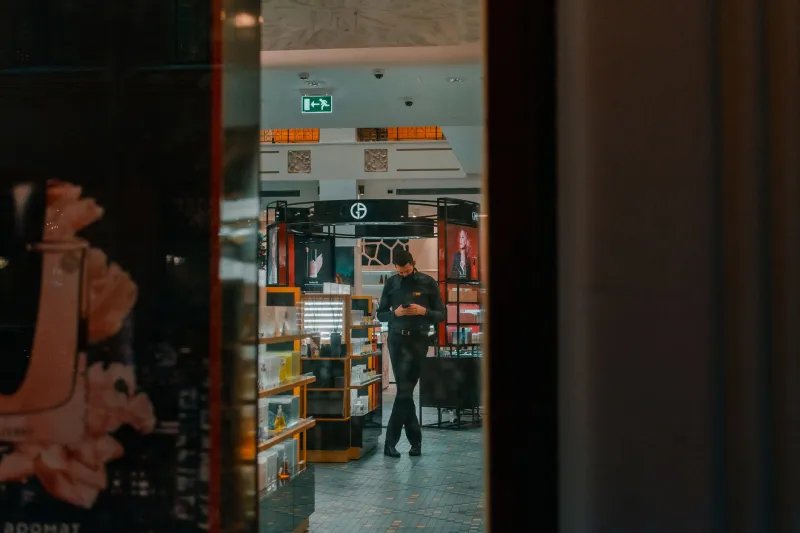
I want to tell you about a department store employee in Yokohama who spent four minutes apologizing to me for a shopping bag.
Not a broken bag. Not a missing item. A bag that was — and I say this as someone who grew up in the American retail ecosystem — perfectly fine. It had a very slight crease along one handle. She noticed it before I did. She caught it as she was handing it over, pulled it back, examined it with the kind of focused attention a jeweler gives a diamond, and then looked at me with genuine distress in her eyes.
She got a new bag. She wrapped my purchase again. She bowed. She apologized three more times on my way out the door.
I walked to the elevator in a mild state of shock and stood there for a moment just processing what had happened. Back home, I once waited twenty minutes at a customer service counter while a teenager argued with his manager about whether he was technically on break. These two realities exist on the same planet.
What Omotenashi Actually Means (And Why It's Not Just "Good Service")
You'll hear the word omotenashi thrown around a lot when people talk about Japanese hospitality, usually in travel content that makes it sound like a kind of exotic politeness upgrade. But the concept runs a lot deeper than someone refilling your water glass without being asked.
The word itself breaks down into the idea of serving from the heart — no front, no performance, no transaction happening beneath the surface. It's the philosophy that genuine hospitality means anticipating a need before it becomes a request, and that the comfort of the person you're serving is not just your job but your responsibility. Your personal responsibility.
That last part is the piece that tends to blindside Western visitors. In the American service model, accountability is diffuse. If something goes wrong, there's a process, a manager, a corporate policy, a form to fill out. The individual employee is a representative of a system. In Japan, the person standing in front of you treats the problem as theirs to own — fully, personally, without hedging.
Which means when something goes wrong, the apology isn't a liability management strategy. It's a genuine expression of shame.
The Mechanics of a Japanese Apology
I've received apologies in Yokohama for things that would never prompt an apology in the States. A train that was two minutes late. A dish that took slightly longer than expected. A menu item that had sold out. Each time, the person delivering the news did so with a level of sincerity that felt almost uncomfortable to receive — like they were handing me something I hadn't earned.
And that discomfort is worth sitting with, because it reveals something about the American consumer reflex. We're trained to expect friction. We brace for the runaround, the fine print, the "I'm sorry you feel that way." We've built entire social media ecosystems around the performance of outrage at bad service because so much bad service exists. Yelp reviews read like dispatches from a war of individual entitlement versus corporate indifference.
In Yokohama, I watched a woman at a small family-run soba restaurant near Kannai bow so deeply to an elderly customer that her forehead nearly touched the counter — because his order had come out three minutes after the table next to him, and she felt the imbalance needed to be acknowledged. The customer waved her off, unbothered. She bowed again anyway.
The apology wasn't for him. It was for her own sense of what the interaction should have been.
Shame, Pride, and the Collective Harmony Underneath It All
To understand why Japanese service culture operates this way, you have to understand a little about the cultural architecture underneath it. Japan is, broadly speaking, a society that orients around collective harmony — wa — in a way that American individualism simply doesn't. The idea of causing disruption, inconvenience, or loss of face to another person carries genuine social weight.
This isn't about being a pushover. Japanese service workers are not servile. What they are is deeply invested in the quality of the interaction as a reflection of their own integrity. A botched order isn't just an inconvenience to the customer — it's a failure of craft. A delay isn't just an operational hiccup — it's a breach of the implicit promise made when someone walked through the door.
There's a concept called kaizen — continuous improvement — that you hear most often in manufacturing contexts, but it filters into everyday service culture too. The goal is never to simply meet expectations. It's to relentlessly close the gap between what is and what should be.
American service culture, at its best, aims for satisfaction. Japanese service culture, at its best, aims for something closer to seamlessness.
What Happens When You Try to Complain
Here's the irony: the customer service culture is so anticipatory that actual complaints almost feel unnecessary. Problems get spotted and corrected before you've registered them as problems. The gap that would prompt a complaint in the States gets closed before it fully opens.
The few times I've needed to flag something in Yokohama — a billing error at a pharmacy, a mix-up with a delivery — the response was so swift and so genuinely distressed that I found myself trying to make the other person feel better. Which is a very strange reversal from the American experience of lodging a complaint, where you generally need to maintain a certain emotional temperature just to be taken seriously.
No one has ever argued with me. No one has cited a policy at me. No one has asked me if I have a receipt in a tone that implies I might be lying.
The Flip Side Nobody Talks About
It would be dishonest not to mention the cost of this system. The emotional labor required to maintain this level of service is enormous, and Japan has a well-documented culture of workplace stress and overwork. The same cultural values that produce extraordinary hospitality also produce workers who feel crushing personal shame over things that are genuinely minor.
The bag with the crease. The three-minute wait. The sold-out menu item. These are not moral failures. But the cultural framework can make them feel that way to the person responsible.
There's a balance that American service culture hasn't found either — where accountability is so diffuse that no one feels responsible for anything. Japan has overcorrected in the other direction. Neither extreme is sustainable.
What I Brought Home With Me
I'm not going to pretend I came back from Yokohama and stopped leaving Yelp reviews or lost my ability to be annoyed by indifferent service. But something did shift.
I started noticing the moments in American retail when someone actually tried — when the cashier caught a pricing error before I did, when a server checked back without being asked, when someone said sorry and meant it. These things happen. They just get lost in the noise of a system that doesn't structurally reward them.
Japanese service culture doesn't work because Japanese people are inherently more polite. It works because the entire system — cultural, professional, personal — treats the quality of human interaction as something worth protecting.
That's not alien. It's just a priority we haven't made yet.