What Japanese Bodies Are Saying When Japanese Mouths Stay Quiet
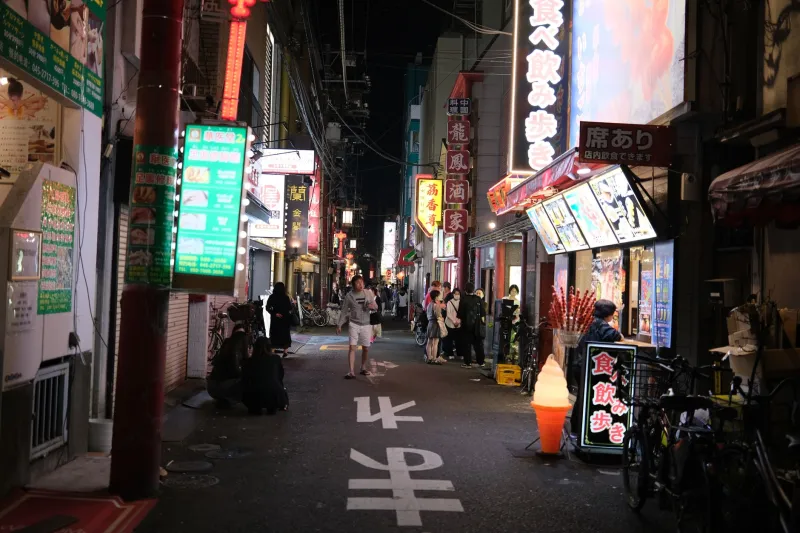
I used to think I was a pretty decent reader of people. Back in the States, I could pick up on a bad mood, sense tension in a room, catch the vibe at a party within minutes of walking in. I was proud of that. Then I moved to Yokohama, and for the first six months, I walked around completely socially blind.
Not because Japanese people are cold or closed off — they're not, not even a little. But because the entire system of human communication here runs on a frequency I hadn't been trained to receive. American social cues are loud. They're verbal, expressive, direct. Japanese social cues are more like watercolor — subtle, layered, and easily missed if you're looking for the wrong thing.
Here's what I've learned from living it, watching it, and occasionally getting it very, very wrong.
The Pause Is Not Awkward. The Pause Is the Answer.
This is the one that trips up Americans the most, and I include my past self fully in that. In the US, silence in conversation is a gap — something to be filled, quickly, before it gets weird. We talk over each other, we jump in, we rush to smooth over any quiet moment like it's a crack in the sidewalk.
In Japan, the pause is the communication.
I had a moment early on at a small business meeting in Minato Mirai where I asked a straightforward question about a project timeline. My Japanese colleague — polite, professional, clearly smart — went quiet for what felt like a very long four seconds. In American terms, that's an eternity. I immediately started backpedaling, rephrasing, offering alternative options. I filled that silence with nervous chatter.
Later, someone gently explained to me: he had been thinking. Genuinely, carefully considering his answer before he gave it. The pause wasn't hesitation. It was respect — for me, for the question, for the conversation. My jumping in had actually interrupted his process. I'd read silence as emptiness when it was full of content.
Now when someone goes quiet after I speak, I wait. And what comes after that pause is almost always more considered and more honest than anything that gets blurted out in real time.
Eye Contact: Less Is Actually More
Direct, sustained eye contact in American culture signals confidence, honesty, engagement. We're taught to look people in the eye. Breaking eye contact too often reads as shifty or disinterested.
In Yokohama — and across Japan broadly — sustained direct eye contact can read as aggressive, confrontational, or just plain rude depending on the context. Watch a conversation between two Japanese people and you'll notice they look at each other, but they also look away — at a shared object, at the table, briefly into the middle distance. This isn't disengagement. It's actually a form of social comfort, a way of releasing pressure from the interaction.
I started noticing this in coffee shops along Motomachi Street. Two friends catching up, and neither one was holding eye contact the whole time — but both were leaning in, nodding, fully present. The connection was real. It just didn't look the way I expected connection to look.
For Western visitors or expats, this matters practically: if someone repeatedly glances away during your conversation, don't assume they're bored. They might be more engaged than anyone who's been staring at you the whole time.
The Bow Isn't One Thing — It's a Whole Language
Everyone knows Japan has bowing culture. But most Westerners treat it like a light switch — bow or don't bow. In reality, it's more like a volume dial with infinite settings, and each setting means something specific.
A quick, shallow nod of the head while passing someone? Acknowledgment. Casual, no pressure.
A 15-degree bow between colleagues? Standard professional greeting. The equivalent of a firm handshake.
A 30-degree bow? Sincere respect, a thank-you with real weight behind it.
A deep 45-degree bow or longer? Apology, deep gratitude, formality at its highest register.
I've watched this play out in department stores in Isezakicho, in train station interactions, in the choreography between shop staff and customers. What looks like a single repeated gesture is actually a running conversation about status, sincerity, and social relationship — all communicated without a single word.
The other thing nobody tells you: the duration matters as much as the angle. A bow held for three extra seconds says something entirely different from one that bounces back up immediately.
Positioning in Space: Who Stands Where Isn't Random
Japanese use of physical space is deliberate in ways that took me a long time to consciously register. In group settings — at a dinner table, in a meeting room, waiting in line — where people place themselves relative to each other communicates hierarchy, relationship closeness, and social role.
The seat farthest from the door, for example, is traditionally the seat of honor — reserved for the most senior or most respected person in the room. The person closest to the door often holds the lowest status in the group. This isn't something anyone announces. It just happens, almost automatically, through a kind of social choreography that everyone seems to know the steps to except me, the American standing there wondering where to sit.
In more casual settings, physical proximity works differently. Japanese personal space tends to run slightly larger than American norms in unfamiliar company, but significantly smaller among close friends or family. I've sat in tiny izakayas in Noge where four people were crammed shoulder-to-shoulder, and the closeness felt warm and intentional rather than crowded. That shift — from formal distance to comfortable proximity — is itself a signal. It means you've been let in.
What Micro-Expressions Reveal (If You Slow Down Enough to See Them)
This one requires the most patience to learn, but it's the most rewarding. Japanese emotional expression tends to be more restrained than what Americans are used to — not because the emotions aren't there, but because overt displays can feel socially disruptive, a drawing of too much attention to oneself.
But the emotions show up anyway, in smaller doses. A slight tightening around the eyes that's different from a genuine smile. A nearly imperceptible pull at the corner of the mouth that suggests amusement before it ever becomes a laugh. A brief micro-frown that flashes across someone's face and disappears before most people catch it.
I started noticing these after about a year here, and it genuinely felt like getting glasses for the first time. Suddenly there was information everywhere I'd been missing.
The practical upshot for anyone spending time in Japan: slow down your own read speed. Americans are wired to process social information fast. Japan rewards a slower, more patient kind of attention — the kind that catches what's happening in the half-second before someone composes their face into what they want you to see.
The Bigger Picture
Living in Yokohama has made me a more observant person in every context, not just here. The experience of being socially recalibrated — of having to relearn how to read a room from scratch — has a way of making you realize how much of what you thought was "just how people are" was actually just "how Americans are."
Japanese nonverbal communication isn't harder than American nonverbal communication. It's just different. Once you start learning the vocabulary — the pauses, the angles, the glances, the careful use of space — you realize you're not getting less information than you were before. You're getting more. It's just quieter about it.