The Space Between Words: How Japanese Silence Became the Most Powerful Conversation I Ever Had
Back home in the States, silence in a conversation is basically a social emergency. Someone says something, there's a two-second gap, and suddenly everyone's reaching for their phones, cracking jokes, or talking over each other just to fill the air. We treat quiet like a leak in the hull — patch it fast before the whole thing sinks.
So when I first started having real conversations in Yokohama, I thought I was doing something wrong. A lot.
My Japanese coworker would finish a thought, and then... nothing. Just this calm, unhurried pause hanging in the air between us. I'd panic-fill it with words I hadn't thought through yet. She'd blink at me patiently, wait for me to finish my verbal scramble, and then respond with something so considered and precise it made my improvised rambling feel like noise pollution.
It took me an embarrassingly long time to figure out what was actually happening.
Meet 'Ma' — The Concept That Changes Everything
The Japanese word ma (間) doesn't translate cleanly into English, which is part of why it gets missed entirely by most Western visitors. At its most literal, it means something like "gap," "pause," or "negative space." But that clinical definition undersells it by a mile.
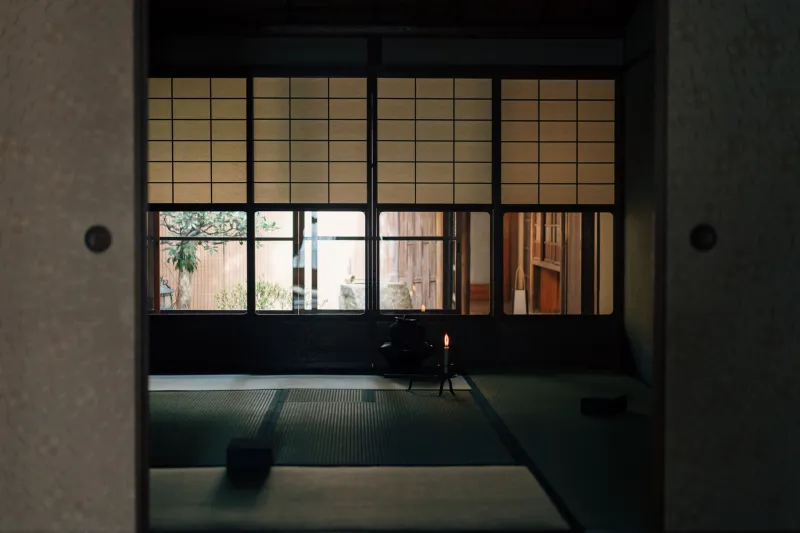
Ma is the intentional emptiness that gives meaning to what surrounds it. It shows up in Japanese architecture — the deliberate open space in a room that makes the furniture feel purposeful. It's in ikebana flower arranging, where the empty space between stems is considered just as important as the blooms themselves. It's in the timing of a taiko drum performance, where the silence between beats carries as much weight as the strike.
And it is absolutely, unmistakably present in Japanese conversation.
When someone pauses before responding to you in Japan, they're not lost for words. They're not uncomfortable. They're not signaling that they disagree or that they've zoned out. They are actively honoring what you said by giving it room to breathe before they respond. That pause is a form of respect. It means: I heard you. I'm taking you seriously. I'm not going to fire back with the first thing that comes to mind.
In a culture that deeply values precision and sincerity over speed, ma in conversation is a feature, not a bug.
The Moment I Actually Got It
About eight months into living in Yokohama, I was having dinner with a small group of colleagues at an izakaya near Kannai Station — the kind of place with wooden counters, cold Sapporo, and yakitori smoke that follows you home in your clothes. It was a casual Friday night, the kind of dinner where work talk drifts into real talk.
One of the guys at the table, Kenji, was describing something difficult — a situation with his family, I think, though my Japanese was still shaky enough that I caught maybe sixty percent of it. When he finished, the table went quiet. Not the stiff, airless silence of an awkward moment. Something else. Something that felt almost like the group collectively leaning in.
Back home, someone would've immediately offered advice, or a story about their own family, or a joke to lighten the mood. Here, nobody rushed. The silence sat there for what felt like a full ten seconds — which, trust me, in American dinner-party terms, is an eternity. Then someone spoke, slowly and thoughtfully, and the conversation moved forward in a way that felt genuinely connected.
I realized I'd been witnessing ma all along and just hadn't had the word for it. That silence wasn't absence. It was everyone in that room deciding that Kenji's words deserved more than a reflexive reaction.
I drove home that night feeling strangely moved by something I couldn't entirely explain yet.
Why Americans Misread It Every Time
The problem is that American conversational culture operates on almost the exact opposite set of assumptions. We're trained — by school, by media, by every awkward family dinner — to treat responsiveness as engagement. The faster and more enthusiastically you respond, the more interested you seem. Silence reads as disinterest, discomfort, or disapproval.
So when an American is in a conversation with a Japanese person who pauses thoughtfully before answering, the American almost always misreads it. They assume the other person is confused, or offended, or doesn't understand the question. Then they repeat themselves, or rephrase, or — my personal specialty — just keep talking until the other person can barely get a word in.
It creates this weird dynamic where the American thinks they're being helpfully clear, and the Japanese person is quietly wondering why this person won't stop talking long enough to hear an answer.
I've done this. Many times. I'm not proud of it.
What Happens When You Learn to Sit in It
The shift, when it comes, is genuinely strange and wonderful.
Once I started actually practicing silence — letting pauses exist without lunging at them — my conversations in Yokohama changed texture entirely. People seemed more willing to say real things. Not surface-level things, not polite things, but actual things. Because I was giving them the space to get there.
I also noticed that my own responses got better. When you don't immediately fill silence, you have a second to figure out what you actually think before you say it. Revolutionary concept, I know.
Professionally, the shift was even more noticeable. In meetings, I learned that the person who speaks last and most deliberately often carries more weight than the person who jumps in first. Letting a question sit for a moment before answering wasn't hesitation — it was signaling that I was taking the question seriously. That reframing alone changed how I was perceived at work.
Bringing It Home
Here's the thing about ma that I keep thinking about even now: it's not uniquely Japanese in its value. It's just that Japanese culture has a name for it, a philosophy around it, and a social permission structure that lets it exist.
In the US, we've built a communication culture so allergic to silence that we've basically outlawed the pause. Podcasts run at 1.5x speed. Texts get sent in real-time fragments. Meetings are back-to-back with zero buffer. We've optimized for volume and velocity at the direct expense of depth.
Ma is a reminder that the space between things matters. That not every silence needs to be filled. That sometimes the most powerful thing you can do in a conversation is simply wait — and mean it.
Yokohama taught me that. A dinner table full of people who knew how to be quiet together taught me that. And honestly? It might be the most useful thing I've picked up since landing here.