At 2 AM, the Konbini Doesn't Judge You — And That Might Be the Most Japanese Thing About It
It was a Tuesday night — technically Wednesday morning — and I was standing in front of a heated display case in a FamilyMart somewhere near Kannai, trying to decide between a nikuman and a cheese-stuffed corn dog. The store was almost empty. A salaryman in a slightly rumpled suit stood at the magazine rack, not really reading anything. A teenage girl in school uniform (at this hour, I know) was methodically building a snack pile at the register. The clerk said almost nothing. The lights buzzed at exactly the frequency of total neutrality.
I wasn't hungry, exactly. I wasn't lost. I just... ended up there. And somehow, that felt completely fine.
If you've spent any real time in Yokohama — or anywhere in Japan — you already know that the konbini is not just a store. But I don't think most of us from the States fully appreciate what it actually is until we've had a few of those 2 AM moments ourselves.
The Third Space America Forgot to Build
Urban sociologists have this concept called the "third place" — somewhere that isn't home and isn't work, where people gather without agenda. Think old-school barbershops, diners, the corner bar where everybody knows your name. For a lot of American cities, that concept has been quietly hollowed out over the past few decades. Strip malls replaced Main Street. Drive-throughs replaced counter seating. The pandemic finished off whatever was left of the lingering culture.
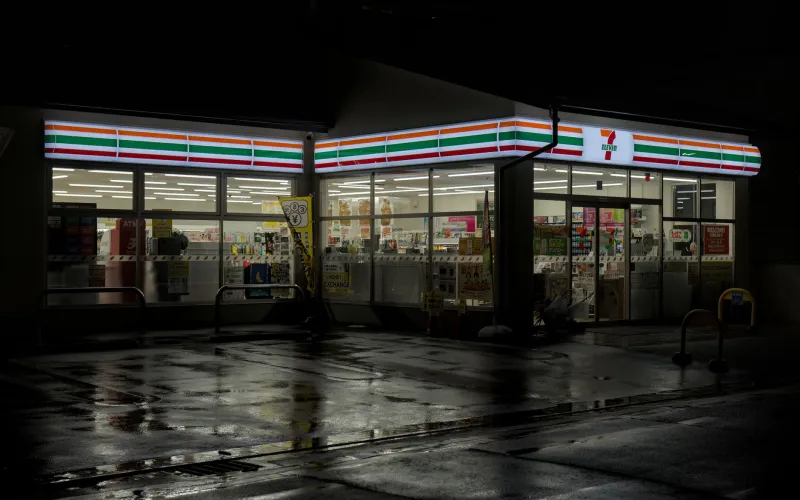
Japan's konbini filled that gap so seamlessly that most people don't even notice it happened. The 7-Eleven on your block in Yokohama isn't just a place to grab breakfast — it's a place to be when you don't know where else to be. You can pay your utility bills there. Print documents. Pick up concert tickets. Buy a reasonably decent bottle of wine, a hot bowl of oden, or a surprisingly thoughtful birthday card. You can sit at a small counter by the window and eat alone without anyone making you feel like you owe the establishment more business.
Nobody's going to upsell you. Nobody's tracking whether you've been there for twelve minutes or forty-five. The social contract is refreshingly minimal: you exist, the store exists, and you're both fine with that.
Why American Visitors Get Weirdly Emotional About This
I've talked to a lot of fellow expats and tourists about this, and there's a pattern. Somewhere around week two of being in Japan, people have what I can only describe as a konbini feeling. It usually hits at an off-hour — late night, early morning, some gray Sunday afternoon. You walk in for a coffee or a snack, and you walk out feeling inexplicably steadier than when you went in.
Part of it is practical. The stores are genuinely, almost aggressively useful. Hot food, cold food, alcohol, medicine, phone chargers, fresh flowers, surprisingly decent sushi — all under one fluorescent roof, available at any hour. For someone navigating a foreign city with jet lag and mild anxiety, that reliability is not nothing.
But I think the deeper thing is the anonymity. In most American retail spaces, there's an implicit social performance happening. The barista who asks your name. The cashier trained to make eye contact and say "have a great day" with just enough enthusiasm to make it slightly uncomfortable. The loyalty app that knows you've been here four times this week. American service culture is warm, but it's also, quietly, always watching.
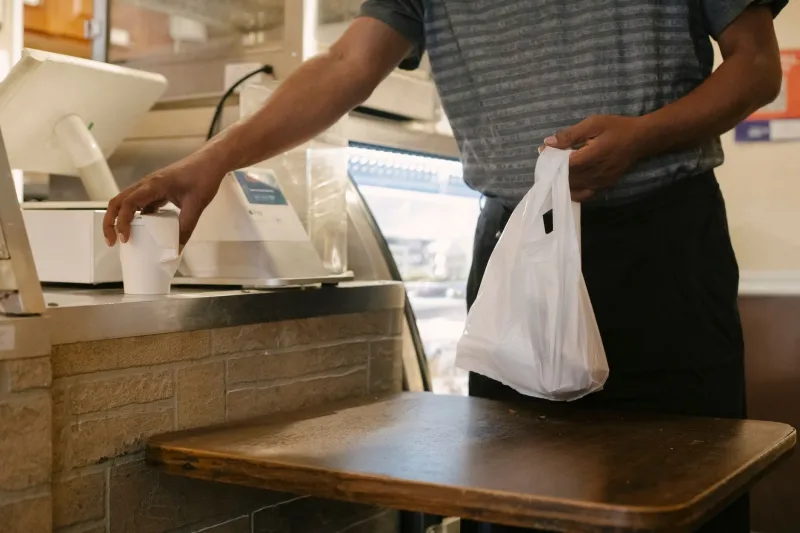
Japanese convenience store culture is warm in a completely different way — through absence of expectation. The clerk bows, processes your transaction with impeccable efficiency, and returns to their station. They are not indifferent to you; they are professionally, respectfully not in your business. For someone carrying the particular exhaustion of modern American social life — where every interaction seems to require a performance of okayness — that restraint feels like an exhale.
The Mirror You Didn't Ask For
Here's where it gets a little uncomfortable, in a good way.
The konbini at 2 AM has a way of reflecting things back at you. Not aggressively — it's not therapy, and nobody's going to hand you a pamphlet. But when you're standing in that buzzing light, surrounded by perfectly arranged shelves and the faint smell of steamed buns, you start to notice things about yourself.
Like: why does this feel more comforting than your own apartment? Why is the option to buy a single-serve sake and a pre-portioned cheese plate and eat them alone at a standing counter somehow more appealing than cooking at home? What does it mean that the most "seen" you've felt all week happened in a place that technically didn't see you at all?
These are not cheerful questions, but they're honest ones. And I think that's part of why the konbini experience hits so many Westerners so hard — it quietly surfaces the loneliness that modern city life has normalized. We're all carrying some version of it. The konbini just creates enough stillness for you to notice.
What the Japanese Have Figured Out That We Haven't
Japanese urban design has long understood something that American city planning keeps rediscovering and then ignoring: people need places to land. Not destinations, exactly — just spots where the pressure drops for a few minutes.
The konbini is engineered, whether intentionally or not, to be exactly that. Consistent. Predictable. Non-demanding. Available at the precise moment when everything else is closed and your options are a vending machine or your own thoughts.
There's also something worth noting about the quality of what's on offer. The onigiri is good. The sandwiches are genuinely better than they have any right to be. The hot foods are rotated with seasonal care. Someone, somewhere, is putting real thought into whether the new spring sakura mochi flavor works. That attention — that quiet insistence on doing the small things well — is very Japanese, and it makes the whole experience feel less like a transaction and more like someone, somewhere, gave a damn.
The Long Walk Home
I bought the nikuman, for the record. Ate it on a bench outside while the city did its quiet late-night thing around me. A taxi drifted past. A cat appeared briefly and then didn't.
I've had more expensive dinners in Yokohama. I've had more scenic ones. But there's something about that particular 2 AM FamilyMart stop that stays with me — not as a highlight, exactly, but as a kind of baseline. A reminder that comfort doesn't have to be elaborate, that belonging doesn't require being known, and that sometimes the most honest mirror in a foreign city is a fluorescent-lit box of snacks that never once asked how you were doing.
Which, honestly? Is exactly what I needed.