One Wrong Receipt and a Four-Bow Apology: What Japanese Convenience Store Contrition Taught Me About Accountability
It started with a receipt.
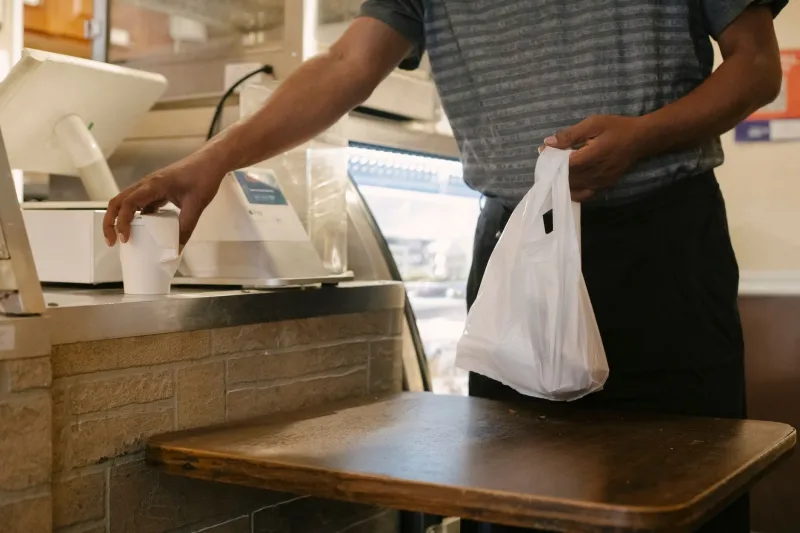
I'd picked up a canned coffee and a tuna mayo onigiri from the FamilyMart two blocks from my apartment in Yokohama — nothing dramatic, nothing complicated. But somehow the cashier rang up the wrong onigiri variety, caught the error herself before I even made it to the door, and what followed was genuinely one of the most disorienting customer service experiences I've had in three years of living here.
She called after me. She bowed. She explained — in rapid, apologetic Japanese I only half understood — what had happened. She corrected the receipt. She bowed again. She handed me the corrected copy with two hands and a slight incline of her head. Then, as I walked out, she bowed a third time toward my retreating back.
I stood on the sidewalk holding my onigiri wondering what had just happened to me.
It's Not Performance. It's Protocol — and the Difference Matters.
The first instinct most Western visitors have when they witness this kind of elaborate apology ritual is to assume it's theatrical. Like a customer service script on overdrive. But the longer I've lived in Yokohama, the more I've come to understand that this interpretation is almost entirely wrong.
Japanese apology culture — especially in retail and food service — isn't about putting on a show for the customer. It's a deeply embedded social technology for managing shame, restoring relational balance, and signaling that the person serving you takes their role seriously enough to feel genuinely bad when they fall short of it.
There's a word that gets thrown around a lot in these conversations: moushiwake. It appears in phrases like moushiwake gozaimasen, which translates loosely as "there is no excuse" — not "I'm sorry," not "my bad," not "oops." There. Is. No. Excuse. The linguistic framing alone tells you something profound about how Japanese service culture conceptualizes accountability.
In American retail, the default apology is a liability management tool. "I'm sorry for any inconvenience" is the corporate equivalent of a non-apology — it acknowledges a feeling without admitting fault, keeps the brand legally protected, and moves the interaction along as quickly as possible. We've all heard it so many times it's basically white noise.
In Japan, the apology is the interaction. It's not a speed bump on the way to resolution. It is the resolution.
The Bow Angle Hierarchy (Yes, This Is a Real Thing)
Here's something I didn't know before I moved here: bowing isn't a single gesture. It's a calibrated communication system, and the angle of the bow corresponds directly to the severity of the situation.
A casual acknowledgment — someone holding a door, a cashier saying thank you — might earn a 15-degree nod. A genuine apology for a service error usually sits somewhere around 30 to 45 degrees. A serious mistake, or a formal business apology, can reach 70 or even 90 degrees. Some apologies involve sustained bowing, where the person holds the position for several seconds to communicate the depth of their remorse.
I once watched a restaurant manager in Kannai bow at roughly 60 degrees for what felt like an uncomfortably long time after a dish arrived late. The customer — a middle-aged Japanese man who seemed more embarrassed by the apology than annoyed by the delay — kept waving his hands in a gentle "please stop, it's really fine" gesture. The manager bowed again anyway.
The point isn't just to satisfy the customer. It's to fully inhabit the apology.
What Americans Get Wrong When They Watch This Happen
There's a particular reaction I've noticed in Western tourists and expats witnessing Japanese service apologies for the first time: a kind of uncomfortable pity. Like they feel bad for the employee. Like all that bowing looks exhausting, or demeaning, or like the worker is being forced into submission over something trivial.
I get it. Through an American lens, where we're culturally conditioned to believe that excessive apology signals weakness or low self-esteem, watching someone bow deeply over a wrong receipt can look like overkill at best and workplace exploitation at worst.
But that reading misses something crucial: the dignity embedded in taking your role seriously.
The konbini cashier who corrected my receipt and bowed three times wasn't humiliating herself. She was communicating — clearly, physically, unmistakably — that she holds herself to a standard, that she noticed when she fell short of it, and that she cared enough about the interaction to make it right with her whole body, not just a muttered "sorry about that."
There's actually something quietly radical about that, especially compared to the American service landscape, where understaffing, burnout, and a cultural narrative that treats service work as low-status have combined to produce interactions that feel transactional at best and hostile at worst. Think about the last time a fast food employee genuinely seemed to care that your order was wrong. Not performing care — actually demonstrating it.
The Shame Architecture Underneath It All
None of this exists in a vacuum. Japanese apology culture is downstream of a broader social architecture built around haji — shame — and sekinin — responsibility. These aren't just abstract values. They're structural forces that shape how people relate to their roles, their communities, and their failures.
In a culture where your behavior reflects not just on yourself but on your workplace, your team, and in some sense your family, a mistake in service isn't a small isolated incident. It's a crack in a relationship. And cracks in relationships require active repair, not just acknowledgment.
This is why the apology in Japanese service culture is almost never a single event. It's a process. There's the initial acknowledgment, the explanation, the correction, the reaffirmation that the relationship is intact. Each bow is a beat in that process. Skip a beat, and the repair feels incomplete.
What I've Actually Taken Home From This
I'm not going to pretend I've started bowing at 45 degrees when I make mistakes. That would be cultural cosplay, and it would look absurd on me.
But three years of watching Japanese apology culture up close has genuinely changed how I think about accountability — my own, and what I expect from others.
I've started noticing how rarely American apologies include an actual acknowledgment of what went wrong. How often "I'm sorry" is really just "I'm sorry this situation is uncomfortable." How frequently we treat accountability as a threat to our self-image rather than a tool for maintaining relationships.
The konbini cashier who chased me down over a mislabeled onigiri wasn't performing contrition. She was practicing something I think a lot of us have quietly forgotten: the idea that how you handle your mistakes says more about your character than the mistakes themselves.
That's worth more than a 45-degree bow. But honestly? The bow doesn't hurt.